Across the Asian diaspora, Lunar New Year songs are treasured for their uplifting, lyrical connotations. Like a blaring gong, these melodies signal reunion, renewal, and the start of spring, filling homes with warmth and streets with festive energy. From family gatherings to bustling marketplaces, year after year, they return with consistency, weaving a connection between generations.
Yet embedded beneath the sing-along refrains are the intricate histories of the people, places, and beliefs that brought these iconic songs to life — prolific stories muted by the loud fanfare.
Spring Has Come Home
In Vietnamese culture, one of the most widespread Tết (Vietnamese Lunar New Year) songs is “Xuân Đã Về (Spring Has Come Home).” Composed in the Spring of 1954 by Minh Kỳ, the song emerged at a pivotal moment in Vietnam’s history — and not because of the holiday itself.
The country was on the brink of independence, navigating the final stages of its struggle against French colonial rule. Along with uncertainty and anticipation, the nation prepared to enter a polarizing era of social and cultural transformation. As some scholars have noted, music began to be categorized by “color.” Genres such as nhạc vàng (yellow music), nhạc đỏ (red music), and later nhạc xanh (green music) reflected not only stylistic differences but also political alignment. Songwriting became increasingly entwined with identity, belief, and the shaping of the nation’s collective narrative.
But “Xuân Đã Về (Spring Has Come Home)” has also carved its place into another category entirely. First labeled as a “nhạc vàng (yellow music)”, “Xuân Đã Về (Spring Has Come Home)” is now cherished as nhạc xuân — spring music — rooted in welcoming and embracing seasonal change. Written in a lively 2/4 time and a bright melody, the song captures a vibrant countryside scene. The lyrics paint the arrival of spring and the joy it brings to the people, happily proclaiming, “Spring has arrived!”
Politics once shaded much of Vietnam’s musical landscape, imposing limits and barriers on what sounds could be shared with the public. Today, “Xuân Đã Về (Spring Has Come Home)” continues to be celebrated every Tết with countless variations across the Vietnamese diaspora worldwide. From rhumba pop interpretations to deep house remixes, each version invites you to “sing out loud to greet the coming spring!”
A Cautious Hope
For those who celebrate the Spring Festival, also known as Chinese New Year, you may be familiar with some version of the song “恭喜, 恭喜 (Congratulations, Congratulations).” It’s a cheery melody that celebrates the cold of winter melting away into spring’s warmth, making it a natural fit for festive celebrations.
Like Minh Kỳ’s “Xuân Đã Về (Spring Has Come Home), the song was born during a very bittersweet and challenging moment in Chinese history.
“恭喜, 恭喜 (Congratulations, Congratulations)” was composed in Shanghai between 1945 and 1946 by songwriter Chen Gexin, who sometimes wrote under the pen name Qing Yu. During this time, China was still struggling to recover from the years of war, occupation, and social disruption following World War II. Devastated cities and families were quietly rebuilding their lives from the rubble. Rather than a purely festive tune, “恭喜, 恭喜 (Congratulations, Congratulations)” came to be as a humble, post-war celebration.
“After experiencing so many difficulties / Going through so many ordeals,” the lyrics ponder, “How many hearts are looking forward / To the news of Spring!” On a poignant, minor key melody, these lines capture the cautious hope of a nation learning to stand again. Survival had been hard-won. The future was still a worrisome mystery. The only thing certain was the arrival of spring in the form of “plum flowers sprouting.”
While it’s unclear how and when “恭喜, 恭喜 (Congratulations, Congratulations)” became synonymous with Lunar New Year celebrations, it has spread beyond Shanghai to become a staple across the global Chinese diaspora. Modern renditions have allowed each generation to reinterpret the song to fit contemporary wishes — and to bring prosperity and blessings.
The 12 Great Zodiac Animals
Have you ever wondered why each Lunar New Year is represented by a different animal? From Mongolia, the folk song “12 жил (12 years)” could offer a melodic answer to those questions.
The song moves sequentially through each of the 12 Chinese zodiac animals — from the mouse to the pig — functioning both as a mnemonic device for remembering the lunar cycle and musical oral storytelling. Each verse assigns distinct qualities to an animal year. For instance, “the cup-shaped hoof of a horse in the seventh year” follows “the white-speckled snake in the sixth year.”
As in other parts of Asia, the 12 zodiac animals in Mongolian culture extend beyond simple calendrical labeling. The 12 animals are associated with personality traits, destiny, and the movement of time. It allows those who believe in the spiritual meaning of the zodiacs to align their daily lives, activities, and big life events with the broader flow of the lunar year. And it might even offer valuable insight into your luck for each new year!
In a sense, “12 жил (12 years)” acts as a tri-bridge between centuries-old nomadic timekeeping practices, Mongolian mythology, and the modern music world. The exact composer and lyricist have yet to be credited. Currently, the song is performed by the traditional Mongolian ensemble, Khusugtun. The piece features khöömii, an ancient UNESCO-recognized singing technique capable of producing multiple tones simultaneously. It is also accompanied by traditional Mongolian instruments like the tovshurr, a two-to-three-stringed lute, and the yatga, a plucked zither.
Instead of centering on “abundance” and “renewal,” the essence of “12 жил (12 years)” is continuity — time as an unbroken wheel. Each zodiac animal will take their steadfast turn. Each season will return without an outlined cue. Each year is a new year.
Harbingers of Spring
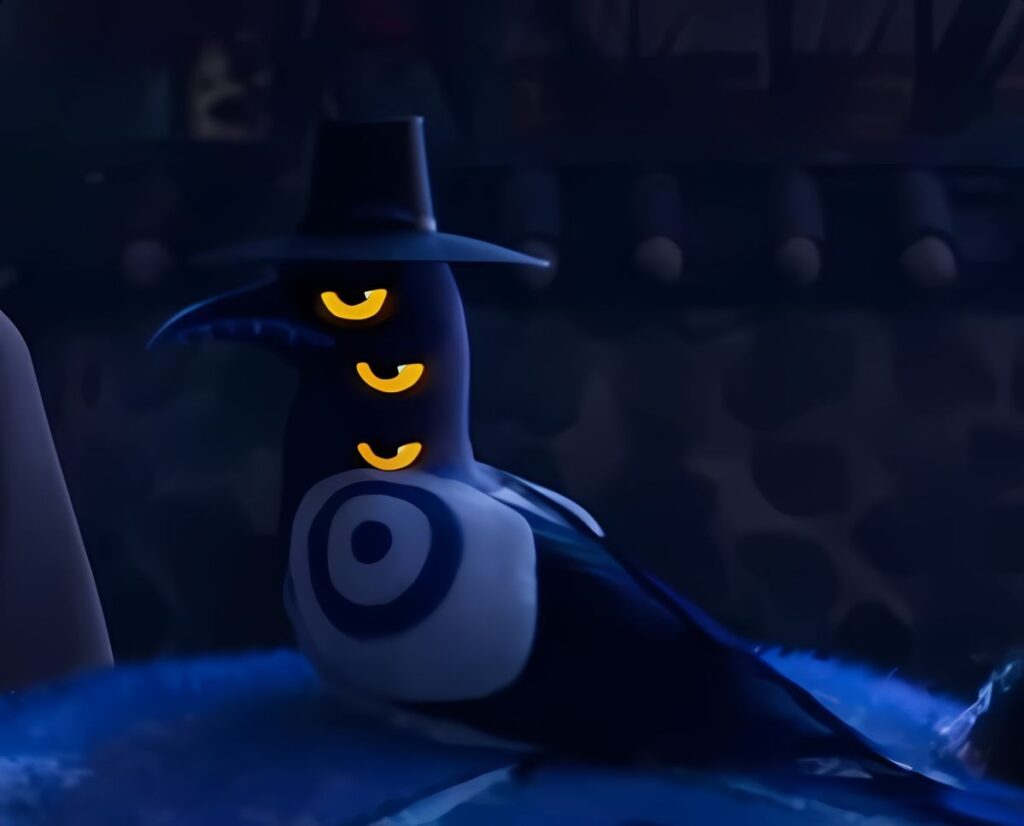
If you have seen Netflix’s record-breaking K-Pop Demon Hunters, you might remember a little six-eyed supernatural magpie named Sussie. In real life, this bird has long held deep cultural significance in South Korea as a symbol of good fortune and auspicious news. Unlike the 12 Korean zodiac animals which each preside over an entire year on their respective turn, the magpie is said to claim Seollal Eve, Korean Lunar New Year’s Eve.
In Korean folklore, magpies are considered messengers of good news as their calls signal that visitors or fortune may be arriving. This belief connects with the traditional children’s song “까치까치 설날은 (Magpie’s New Year’s Day),” sung during Seollal celebrations. However, the bird’s presence in the original version of the song has been the subject of debate.
The nursery rhyme was written by Yun Geuk-yeong during the Japanese colonization of the Korean peninsula. At the time, the use of the Korean language was officially banned, and those caught would be swiftly punished. Yun’s creation was both a cultural act of preservation and a form of resistance against forced assimilation. By embedding the Korean language into children’s nursery rhymes, he hoped younger generations could continue learning and speaking their native tongue despite government suppression.
Some Korean linguistic scholars note that the magpie mentioned in the later versions may not have appeared in the original lyrics. The reference may be a misinterpretation arising from an olden dialect, which influenced how certain words and phrases were heard and transmitted.
Whether or not the magpie actually appears in the original lyrics, “까치까치 설날은 (Magpie’s New Year’s Day)” still carries the goodwill of the bird. Through its simple melody and vivid domestic imagery, the warmth of Seollal shines through — children in their traditional clothing, elders receiving respectful bows, and households filled with food and laughter.
From Past to Present
This list highlights only a small portion of Lunar New Year songs and their origins, but countless more exist across Asia. Each carries its own unique story waiting to be unraveled. Despite differences in tune, language, and tradition, the common thread is how music continues to endure and evolve. With every new Lunar New Year, a new generation adds its own layer, carrying these precious songs forward while keeping history alive.
Ready to start a new Lunar New Year tradition? Check out the modern tracks for your Year of the Horse playlist!


