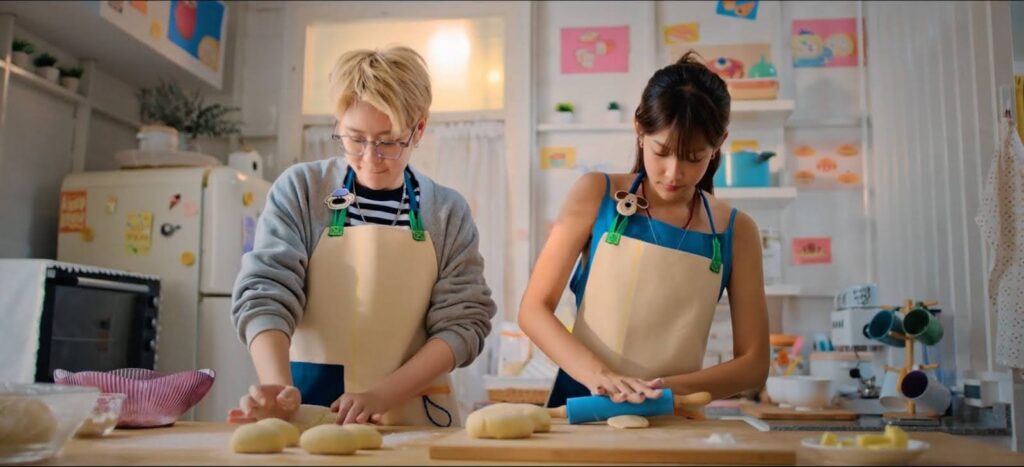
Claire Jirassaya Wongsutin Talks Feature-Length Debut “Flat Girls” and Her Intimate Filmmaking Voice
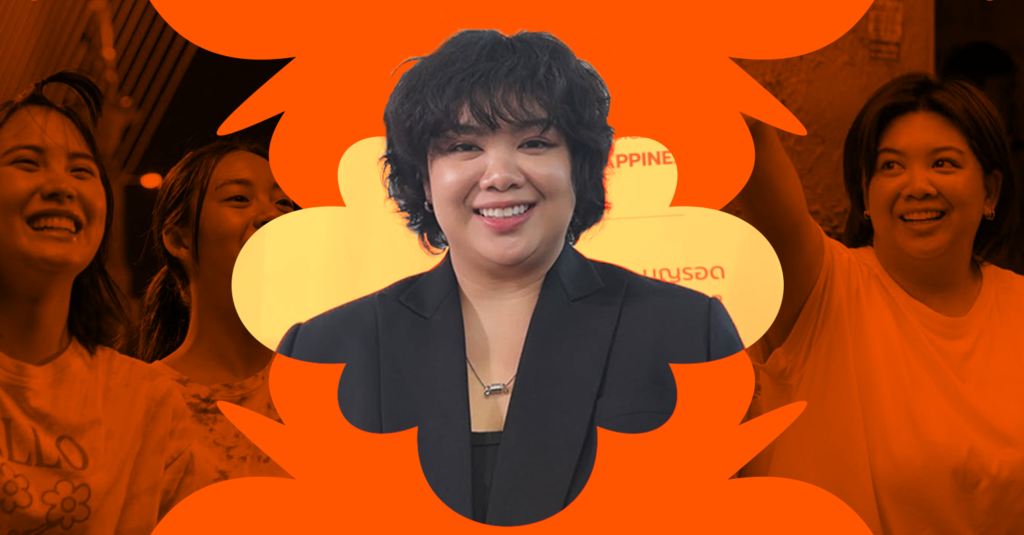
What started as a vague childhood dream for Thai filmmaker Claire Jirassaya Wongsutin evolved into a well-founded passion. Over the past decade and counting, she has yielded narratives that present an affecting take on the classic and complicated coming-of-age genre. Through her debut feature-length film Flat Girls (2025), Wongsutin pulled from personal experiences and places to create a female-centric story that details the subtle angst of crossing the threshold into the unknown.
After connecting with EnVi over email, Wongsutin eagerly set aside time despite her busy schedule to share insights into the behind-the-scenes development of Flat Girls, reminisce about her early filmmaking days, and discuss the prominent themes of her work.
From the Flats to the World
Since January 2016, the Thai film production company GDH 559 has had its finger on the pulse when it comes to identifying promising films and amplifying them to a larger market. With notable releases such as Bad Genius (2017) and How to Make Millions Before Grandma Dies (2024), GDH has established a solid footing in the Thai entertainment industry — and despite having nine years of operation behind them, they did not let up one bit last year.
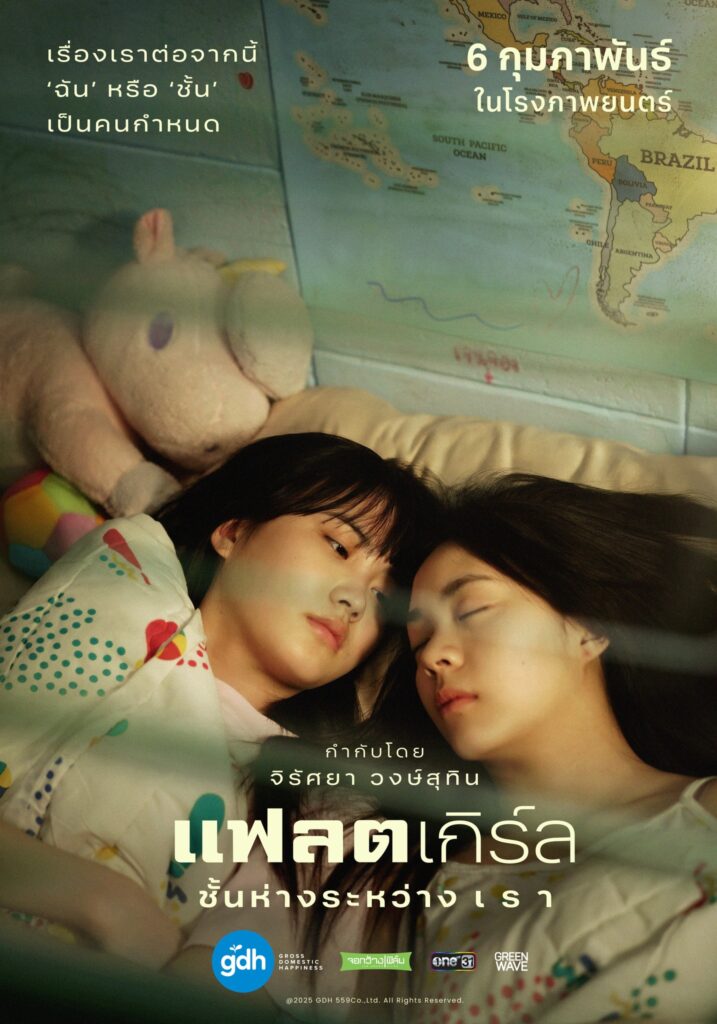
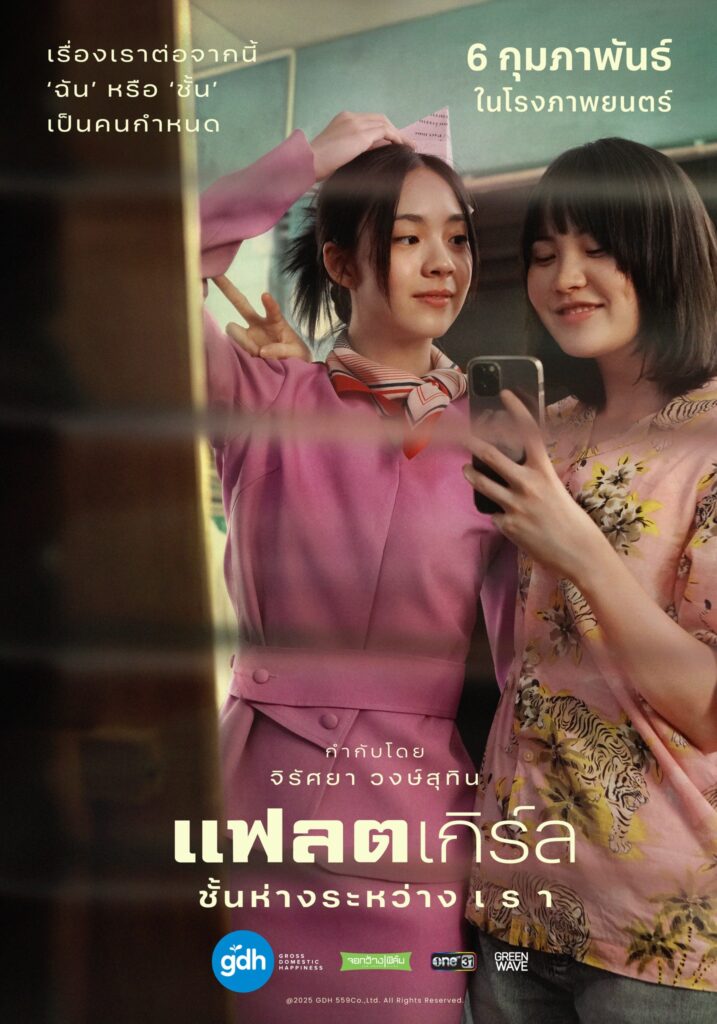
Leading the pack in their 2025 slate was the coming-of-age film Flat Girls, written and directed by Wongsutin and produced by Jira Maligool (nicknamed Keng) and Vanridee Pongsittisak (nicknamed One). At the center of the story are two young girls, Anne (Fatima Dechawaleekul) and Jane (Kirana Pipityakorn), who spend every waking moment — and even slumbering ones — together while growing up in one of Bangkok’s police flats. As they reach the cusp of adulthood, however, their once impenetrable bond is threatened by various external factors, including the arrival of a young police officer, Tong (Pakorn Chatborirak). With his presence, the seemingly faultless world the two girls have experienced begins to falter, and harsh realities come to light. From coming to terms with matters of differing socioeconomic status, sexual identity, and the complexity of navigating relationships, there are many obstacles that Anne and Jane must address before they can truly begin to come into themselves.
The art of screenwriting — or any creative endeavor, for that matter — is an amalgam of many key aspects. Still, the most essential one is drawing on your own personal life experiences, as that is where the most poignant art comes from. While discussing how the concept of Flat Girls came about, Wongsutin explained that she wanted to center the story around an environment that nurtured her for a large portion of her life. “I grew up in a police flat until I was 30,” Wongsutin revealed. “I felt a strong desire to record my life in those flats through my first feature film.”
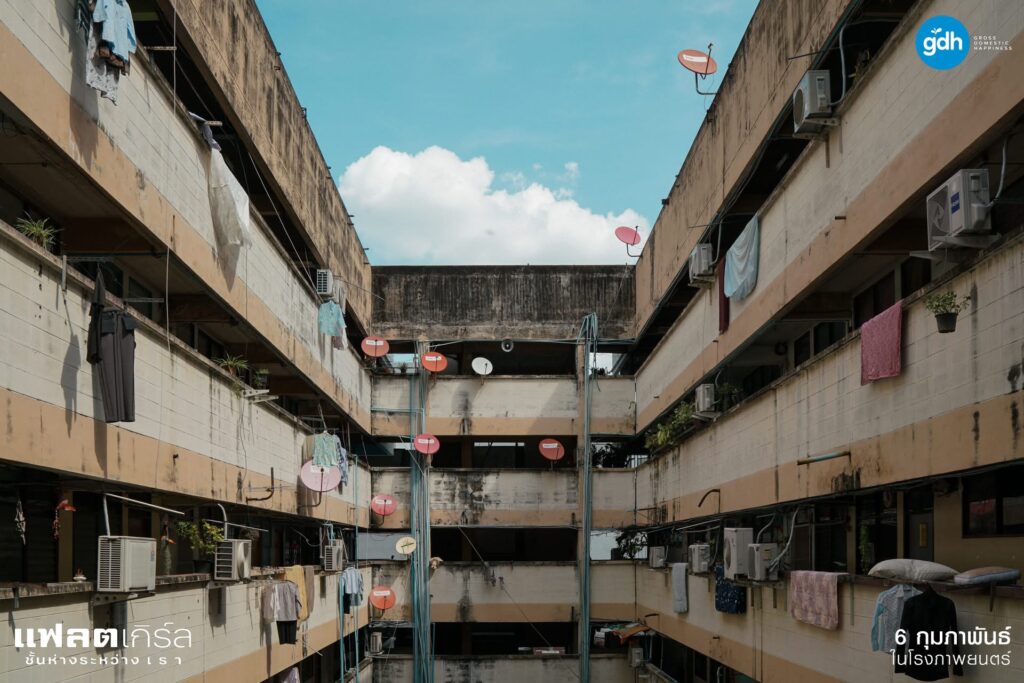
For some, growing up in a close-knit setting can cause them to see the world through a narrow lens. Wongsutin is quite the opposite. As she further explained the inception of her brainchild, her unique worldview came into focus. “There were many themes I wanted to highlight: growing up as a girl in a male-dominated society, the role of women in police housing, the layers of bureaucracy, and the instability of life in Thailand. I feel that telling a story about a small community like a police flat can reflect the bigger picture of the whole country.”
Not Just Words on a Page
One of the many drawbacks of a broad mind is condensing information into a concise form. Although the development of the script wasn’t all that effortless at first, Wongsutin shared that as she continued to flesh out the idea more and more, she eventually landed on a detail that would become a guiding force. “At first, the script was quite messy. I wrote it more like a novel than a screenplay. But during development, I realized the relationship between Jane and Anne was the strongest thread,” Wongsutin said. “However, I didn’t want to make a simple romance. I wanted the audience to see that love between two girls involves many other layers — gender, identity, and status — which all affect their relationship.”
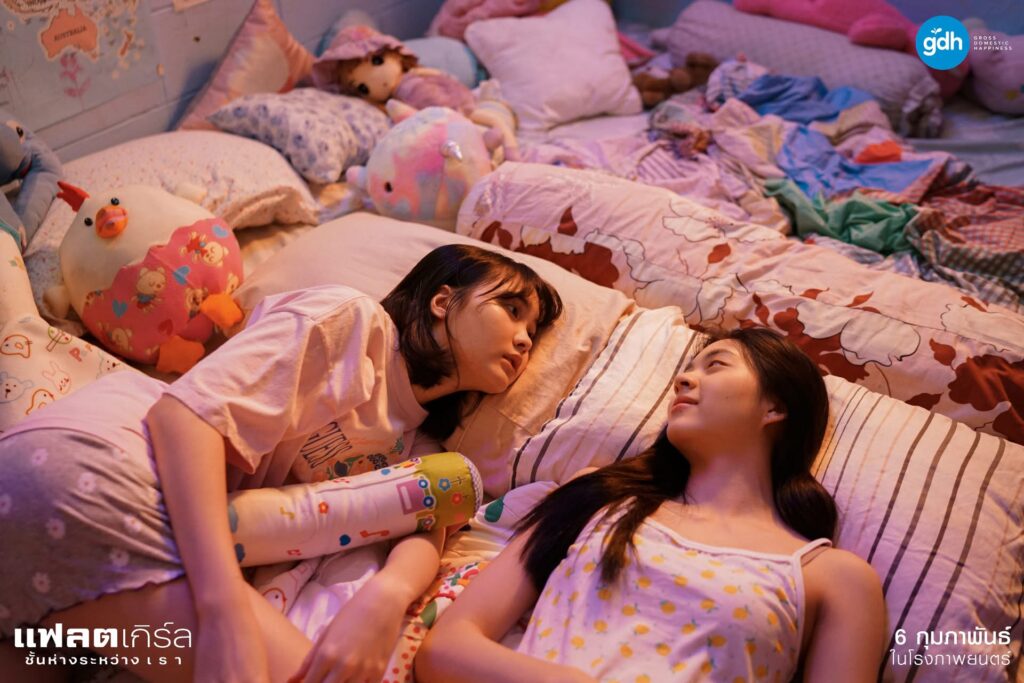
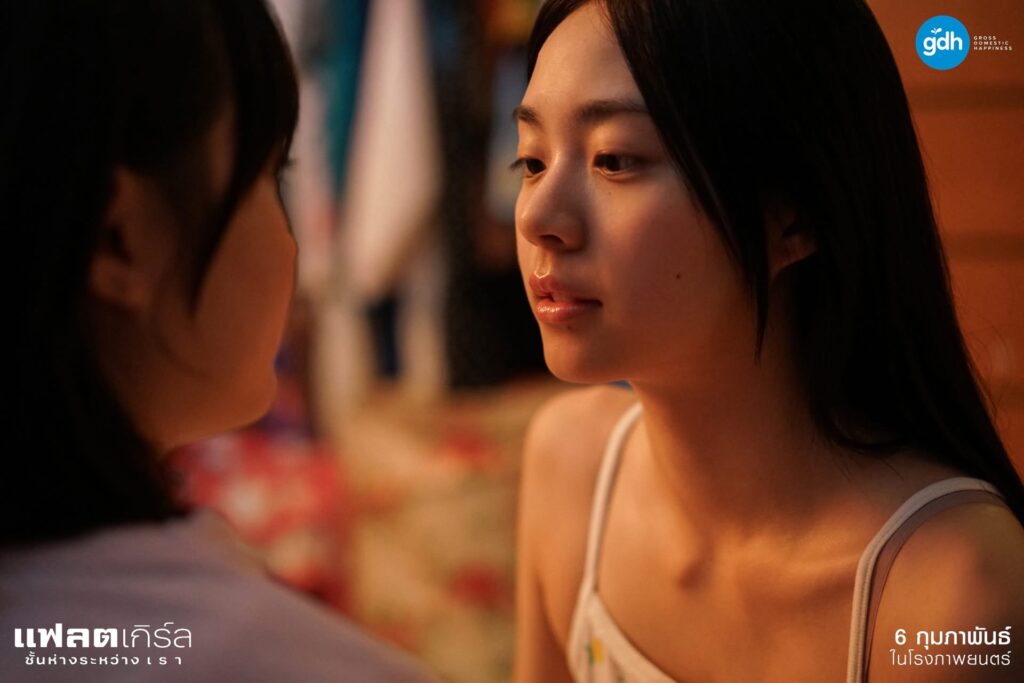
Being the only one who knows the characters inside and out, it was no surprise that Wongsutin participated in the film’s casting process, which she explained “took a very long time.” However, the search culminated in the discovery of two rising talents: Kirana Pipityakorn and Fatima Dechawaleekul. Despite both girls being relatively new to the entertainment industry, Wongsutin, who had strict casting guidelines, explained that each of them ultimately possessed the ability to morph into their characters, both physically and emotionally.
“For the role of Jane, I was looking for a girl with innocent eyes — someone positive but sensitive, who still felt like a young girl both inside and out. She also had to be willing to gain weight for the role, [and] Kirana was the only one who fit all these criteria,” she explained. “For Anne, I originally thought I needed an actress with a lot of experience because it’s a difficult role; Anne has to be more mature than her age. Then I met Fatima. She is very different from Anne in real life and didn’t have much acting experience, but she showed me she could ‘become’ Anne instantly during her audition tape. Her eyes are full of emotion, which is very important for film.”
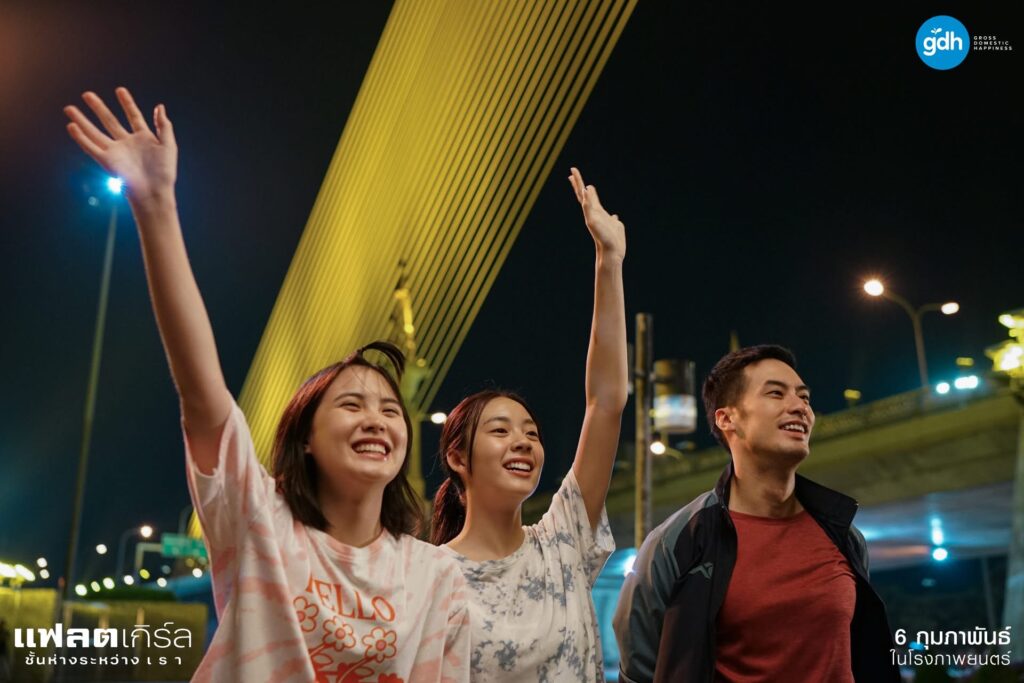
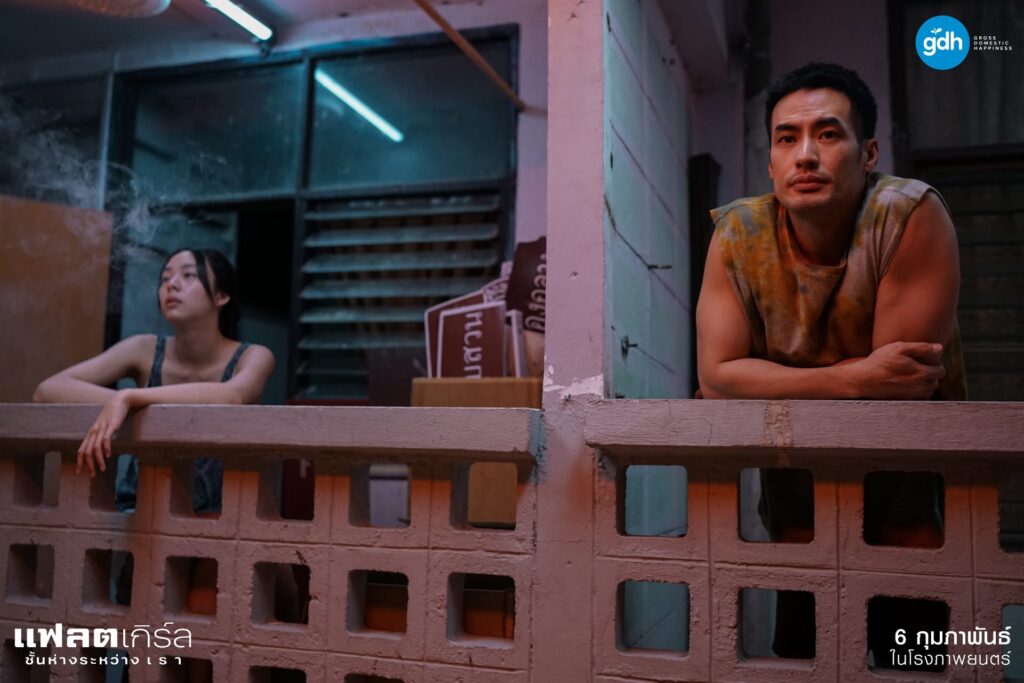
As the principal photography phase progressed, any lingering uneasiness dissipated as Pipityakorn and Dechawaleekul immersed themselves in their characters. While looking back at her time working with the young actresses, Wongsutin praised the duo for their tenacity in what would be their first leading role in a feature film: “We became like sisters because this movie was a first for all three of us. We grew up together. Their dedication was impressive — they worked hard to build a real bond to become Jane and Anne. They supported each other throughout filming. There’s a deep connection between them; sometimes, just looking at each other could trigger the right emotions for a scene.”
Dare to Dream
Filmmakers aren’t made overnight. When revisiting the moment that she decided she wanted to take on the entertainment industry, Wongsutin explained that it wasn’t a straightforward decision at first.
“It was more like a dream I never dared to dream,” she explained. “I loved TV dramas, followed actors, and was obsessed with movies, but I never thought doing it myself was possible.” Despite her worries, she ultimately decided to pursue her dreams one step at a time — graciously taking any opportunity that came her way. “[Working as a filmmaker] was the only path I’ve been determined to follow,” she said.
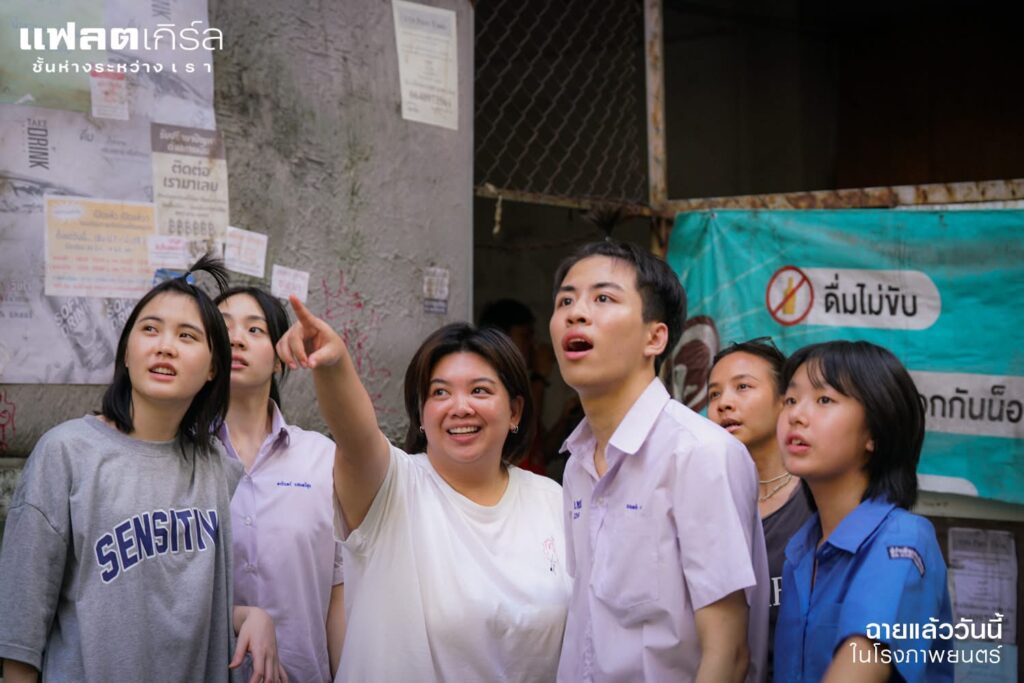
This deep-rooted determination shone through during her time at Bangkok’s Chulalongkorn University, where all three of her short films received awards at both national and international film festivals. When discussing the details of her first short film, กลับบ้าน Welcome Home (2012), Wongsutin revealed that it was made possible thanks to her friend and fellow filmmaker, Pat Boonnitipat (the director of How to Make Millions Before Grandma Dies). “We were friends in university. [He] found funding for our groups to make short films with the theme of celebrating Father’s Day in Thailand,” she said. “So I made a film about my father, who is no longer with me. [And] around that time, Thailand had a major flood, and my grandfather had to stay at my house. It was a memorable experience, so I combined those two stories into กลับบ้าน Welcome Home.”
Wongsutin entered the completed film into the 16th annual Thai Short Film and Video Festival, where she won the top award in the White Elephant competition for undergraduate student filmmakers. Her best-performing student film was That Day of the Month (2014), which competed in six international festivals and garnered four wins. When asked about the experience, Wongsutin stated, “It was so exciting.” She further explained that she was not granted the luxury of traveling abroad often, so being able to do so while showcasing her love of film through her work was a “huge deal.” However, as much as it was exciting, it was equally as nerve-wracking for a budding filmmaker: “I was quite inexperienced [at the time], [I remember] I once messed up an English Q&A in Busan, which was embarrassing!” she said. “But film festivals always give me energy. Seeing movie lovers gather and talk about films is wonderful.”
Although her work was featured in South Korea, Japan, Singapore, Portugal, and Ukraine, Wongsutin stated that her most memorable experience was the Clermont-Ferrand International Short Film Festival in France. “The whole city is enthusiastic about the festival,” she said. “I saw teachers bringing entire kindergarten classes to watch short films. I’d never seen that in Thailand. It was amazing to see the community so involved.”
Grounded in Authenticity
Throughout Wongsutin’s career, there has been consistent praise for her refined portrayal of discovering one’s sexuality in adolescence. When expressing what the exploration of the particular subject matter means to her, she explained: “I went through my own journey of searching and uncertainty regarding my sexual identity over many years. That fluidity made me feel confused, ‘weird,’ or unaccepted at times, but it also felt like freedom. I think seeking acceptance is a big part of being a teenager. I think I might be trying to find that acceptance through my filmmaking.”
Regarding the choice to focus on adolescence through the lens of girlhood, Wongsutin said, “It’s what made me feel different while growing up. I was a girl who didn’t fit the ‘norm’ in terms of appearance or sexual awakening at that time. I didn’t see girls like me in the movies or shows I watched. I wanted to share that perspective. I think I will always be interested in female characters, though the struggles they face might change as I get older.”
The insertion of personal elements in Wongsutin’s films does not stop at matters of internal conflict. Another lesser emphasized component of her work is the inclusion of badminton as a narrative device. The first introduction of the sport was in her second student short film, เด็กสาวสองคนในสนามแบดมินตัน She is My Best Friend (2012), and her second visitation came with Flat Girls, where she used it as a narrative device that further highlighted the widening gap between Anne and Jane. When discussing the significance of badminton across her films, Wongsutin explained that “[it] was something I did every day while living at the flats. I saw friendships form because of it, and I had fights with friends because of it. I saw differences in social status through the gear people used. I saw ‘life’ through badminton all the time, so it was impossible not to include it in my work.”
Practice Makes Progress
Outside of her personal creative endeavors, Wongsutin has developed her skills through working on productions across television and film. Shortly after graduating from Chulalongkorn University, she began working as a screenwriter at GMM Tai Hub, a leading film studio that would later be succeeded by GDH 559 in 2016. During her time at these studios, she worked as a co-writer on both the horror film The Swimmers (2014) and the thriller-fantasy film Homestay (2018). In 2019, she took on the challenge of directing and co-writing the romantic comedy family series ONE YEAR: 365 Days, My House, Your Home.
When discussing her experiences working on a variety of productions, Wongsutin shared that she’s actually an introvert and that “I usually prefer screenwriting over directing.” However, as she progressed in her career, she had a change of heart and chose not to subscribe to her reserved nature, since it would ultimately hinder her ingenuity. “I used to think I would only direct projects I was passionate about, but directing is a skill that requires practice. I started taking on more directing jobs to improve myself and to learn how to communicate better with a crew.”
In Conversation on Remakes
Are you ready for a throwback? For the final topic of conversation in the email interview, EnVi took a trip down memory lane. In a 2015 interview with BK Magazine, Wongsutin was asked, “If you could remake any film, what would it be and what would you change?” to which she explained that she would remake the comedy heist film Ocean’s Eleven (2001), but with an all-women cast made up of A-list Hollywood stars. Just three years later, Ocean’s 8 (2018), which had a strikingly similar concept, made its theatrical premiere. When asked about her thoughts on the film, she stated: “(Laughs) I don’t have a very serious opinion, but I loved Anne Hathaway in that — she’s a comedic genius. And Cate Blanchett in that movie probably turned a lot of young girls gay!”
Since her original concept was already adapted, EnVi was curious to find out what other movies the filmmaker would choose to remake. As an update, Wongsutin revealed that she would be interested in remaking Luca Guadagnino’s 2017 romance-drama film Call Me By Your Name, “but make it lesbian.” Whether the remake comes to life or she delivers a completely new idea, there is no doubt that whatever she creates will carry the essence of Wongsutin’s established vision.
For more updates on Jirassaya Wongsutin, be sure to follow her on Instagram. Flat Girls is now streaming on Netflix.
Ready for more ACT!ON content? Check out our interview with “Ready or Not 2” actress Olivia Cheng here!