YA Author Angelica Cheng Pushes For an Equal F1 World in “The Fast Track”
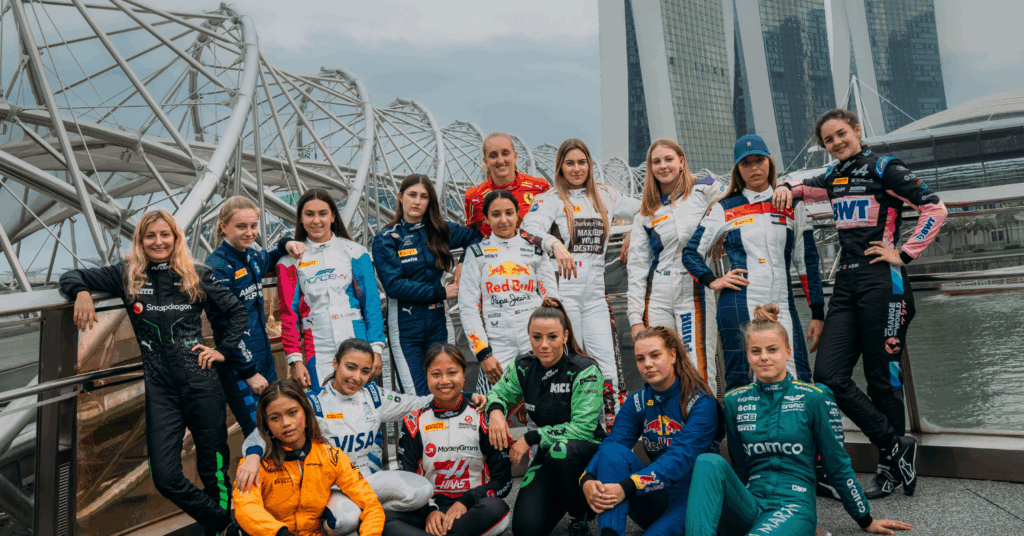
When readers meet The Fast Track’s fierce Justine Kwong, she’s the only female driver racing in Formula 3. She’s also gunning for a seat in Formula 2, a seat that could open major doors in her racing career. As in, becoming-the-first-female-Formula-1-champion kind of doors.
Other female drivers have made it to the F1 level: The Italian driver Maria Teresa de Filippis made three race starts in 1958 for Maserati. Her best result was P10 at Spa-Francorchamps in Belgium. Lella Lombardi was the only other woman with recorded F1 race starts. She started 12 Grand Prix between 1974 and 1976.
Susie Wolff, currently the managing director of F1 Academy, participated in Grand Prix practices in the mid-2010s and became a test driver for the Williams team during the 2015 season. And just this past April, the 2025 F1 Academy champion Doriane Pin became the first woman to drive a Mercedes F1 car — in a test drive at the historic Silverstone track, no less.
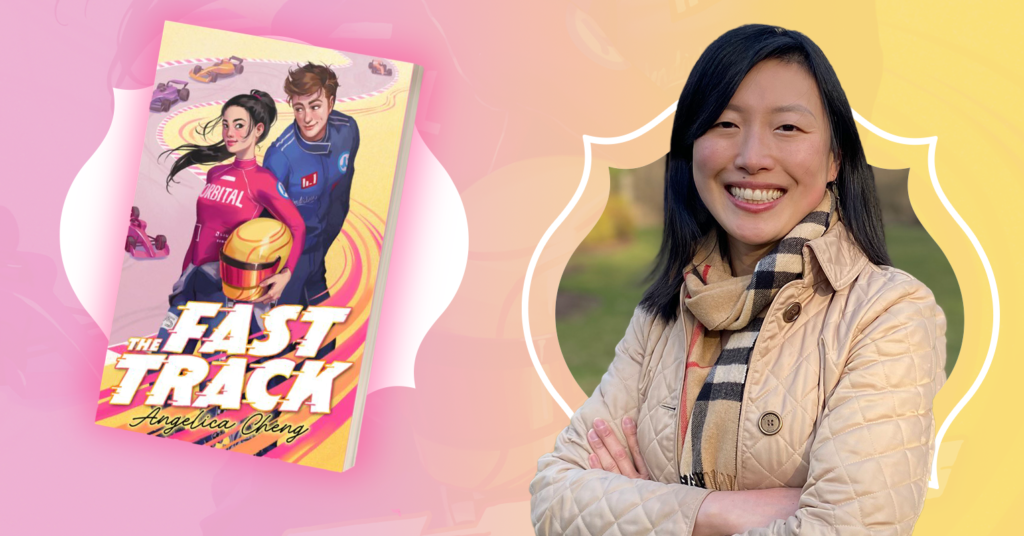
In her debut novel, Angelica Cheng shines a light on the barriers preventing young women from joining the elite ranks of the F1 grid. When she dove headfirst into learning more about the high-stakes racing series in 2020, Cheng had questions. “First, I was like, why aren’t there any female drivers?”
That took her down a rabbit hole of research, and she emerged with a story idea: “If there were to be a female [F1] driver on the grid, what would that journey have looked like?”
A few weeks before The Fast Track hit shelves on August 4, EnVi spoke with Cheng at a cozy New York City café. We talked about the research behind her debut novel, why she wanted it to focus on the F1 world, and some lessons she has learned about the traditional publishing industry.
Coming of Age as a Racing Driver
Cheng always knew she would write a book. When she was a kid, she had notebooks upon notebooks. But making the time and the space to pursue this dream didn’t come to fruition until 2020, when she suddenly had time on her hands during the COVID-19 lockdown. “It’s time to make good of something that I’ve always wanted,” Cheng told EnVi about that moment.
That same year, Cheng dove headfirst into Formula 1. She later drafted the first version of The Fast Track, a story that came to her “very naturally.” The heart of it was a question: “If there were to be a female [F1] driver on the grid, what would that journey have looked like?”
From page one, Justine Kwong makes herself — and her love of racing — known. She’s passionate, literally vibrating with excitement when she finally gets a look at her new F3 car. She’s also just a girl, falling for her (hot) teammate while wanting to beat him on track in the same breath.
Cheng knew from the get-go that Justine’s story would be a “fish-out-of-water” one. The fiery main character slowly changed from the first draft to the now-published book. “That first draft was so long ago, and it was so completely different,” Cheng laughed. After many drafts, many iterations where something changed each time, Justine became “more and more fully fleshed [out].”
Justine is practically synonymous with “ambitious,” but her relationship with her mother, who moved to the United Kingdom with the young driver, adds more complexity to this ambition. Justine’s goals “override everything else,” Cheng shared. The driver partially gets this from her mom. Justine’s mom often spots content opportunities to polish her daughter’s image and to attract advertisers.
This character developed “very naturally,” according to Cheng. Justine’s mom wants her daughter to succeed “so badly,” but what does that look like on the page? “If I draw it out to an Asian American context, we always joke about ‘tiger parents,’ but that stereotype exists because so many in the community do have hard-driving parents,” the author noted. “So I took that and was like, okay, what does that look like in a racing [context]?”
Fast Cars, Tall Barriers
A similar question, “What does it feel like to be her?,” guided Cheng as she expanded on Justine’s motivations and her background. In The Fast Track, Justine is “tremendously successful,” but she’s constantly otherized as the only female driver on the F3 grid.
“She just wants to fit in,” Cheng told EnVi, and it’s evident in the first few pages of the novel. “I think it’s also core to the teen experience, in that all you want to do is fit in and be a part of the crowd,” the author added. Regardless of the unique high-pressure circumstances Justine encounters, she’s still finding herself and getting to understand how her differences make her more powerful just like any other teenager.
Justine’s race engineer and best friend Roz helps make the F3 pressure cooker bearable. But, as Cheng revealed, Roz wasn’t added into the story until a few drafts after that first iteration. Cheng noted, “Without Roz, this story is so…heavy.” Roz is always there for Justine with a smile or a pep talk — and she also encourages the F3 driver just to be a teen. “[There were] less moments of levity, less moments of fun,” added Cheng.
Most importantly, Roz relates to Justine. Like The Fast Track’s main character, Roz is young and she’s the only female engineer working with a F3 driver. Yet, at the same time, Roz is a foil to Justine. They bring different perspectives to the story, but they are still ride-or-die for each other. “It added much more to the story to have this important friendship that added a lot of heart,” their creator shared.
Diving Headfirst into the World of F1
The Netflix documentary Drive to Survive introduced Cheng to F1 “in more depth.” She went to her first race in 2013 in Singapore, where she was living at the time, but didn’t know too much about the sport.
However, after watching Drive to Survive, Cheng was hooked. “I was addicted from there,” she said. “It was really fun, not just the driving and racing itself, but also the engineering that goes into it and all the politicking that goes on behind the regulations.” She summed up the sport in one sentence: “It was the whole package.”
When Cheng went down the rabbit hole that is F1, she listened to technical podcasts, read all the books — including How to Build a Car by Adrian Newey — and watched YouTube videos about the different tracks and the aerodynamics of the sport. “When I get into something, I get super into it,” she explained with a laugh. Of course, it also helped that she had “so much time” on her hands.
This interest changed how the author watches actual F1 races, creating the necessary fodder for what would become her debut novel. Cheng watched the pre- and post-race interviews surrounding the two-hour races. She paid attention to things beyond the track, like where the F3 tents were set up.
Plus, any F1 fan can tell you about the sheer amount of content the F1 teams produce around their drivers and each race. Viewers can go to work with Ferrari driver Charles Leclerc through a YouTube vlog, or even take a tour of McLaren’s new garage. All these “readily accessible” details helped Cheng “bring [The Fast Track] to life” — with a bit of imagination from time-to-time.
That imagination came in while writing the racing chapters. In her first draft, Cheng laid out the physical details. “I was more focused on the physical sensation of what it felt like to be in a car; how it feels to be going those speeds; strapped into your harness, being whipped around; experiencing the G-forces,” she said.
Later revisions revealed a balance between these tangible details and how racing impacts Justine emotionally. Cheng continued, adding, “As I got deeper into the revision process, I also focused more on the emotional scenes in terms of the [arc] of the story. Is [Justine] having success, is she moving towards her goals, or is she having setbacks?”
Character Dynamics & Lessons Learned
One major roadblock Justine faces in the novel is her teammate, Cameron Evans. In F3, F2, and F1, each team has two main drivers. While these drivers need to win as many points as possible for their team, they also compete with each other to be named the season’s champion.
This baked-in tension provided the foundation for the rivals-to-lovers dynamic in The Fast Track. However, Cheng experienced some other challenges when writing this relationship. “You know how it starts, and then you know how you want it to end,” she explained. But filling in the middle and getting to the believable “lovers” part took time. Cheng built this fun, yet challenging, dynamic through her iterative writing style. She would re-read a draft after writing it. If it didn’t feel right, she would add something, cut parts, and/or switch around the pieces.
Now that Cheng has crafted a rivals-to-lovers relationship, she told EnVi, “[I] could trust my gut a bit more” for future novels that also feature this dynamic. As Cheng noted, “[You] innately have a better sense of pacing, of character arcs” after going through the novel-writing process.
Cheng also shared some lessons she learned about the traditional publishing industry — especially as an author of color. “Nothing really emotionally prepares you for being rejected,” she began. Rejection is a topic frequently discussed in the book community, but Cheng noted that it will happen throughout the entire publishing process. From querying literary agents to selling your books, authors will constantly face rejection.
That’s why finding the right agent is crucial, particularly for authors of color. “You want to have somebody in your corner,” Cheng emphasized. First and foremost, they need to be able to sell your book, as a literary agent and author relationship is an important business relationship. But you also want someone who understands you as a person and gets the story you want to tell. “You want an agent who supports you, advocates for you, [someone] who’s not afraid to push your editor or publisher,” added Cheng.
Besides The Fast Track, Angelica Cheng has another young adult romcom in the works. “I can’t say too much about it,” she teased EnVi. Her next novel is similar to her debut, in that there are “big stakes combined with big feelings,” but it doesn’t take place in the F1 world.
For now, the spotlight remains on The Fast Track. With its publication on August 4, we can finally say, “It’s lights out and away we go.”
The Fast Track is now available wherever you get your books. Keep up with Angelica Cheng on Instagram, her newsletter, and her website.
Want to read more interviews with your favorite authors? Check out EnVi’s conversation with Zoulfa Katouh, author of As Long As the Lemon Trees Grow and The Ocean Would Paint Me Blue!