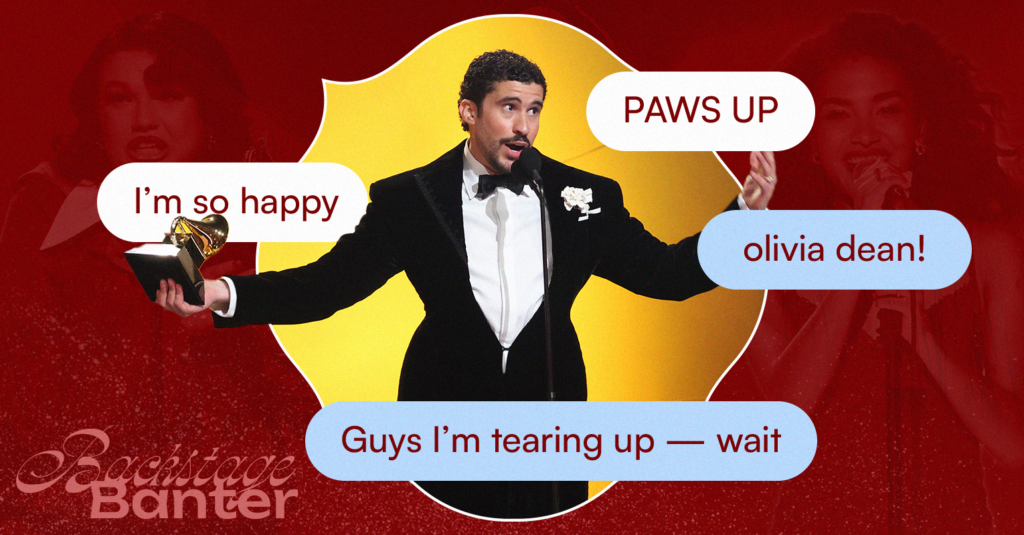
Bad Bunny Dances with Pride and Resistance in Super Bowl LX Halftime Show
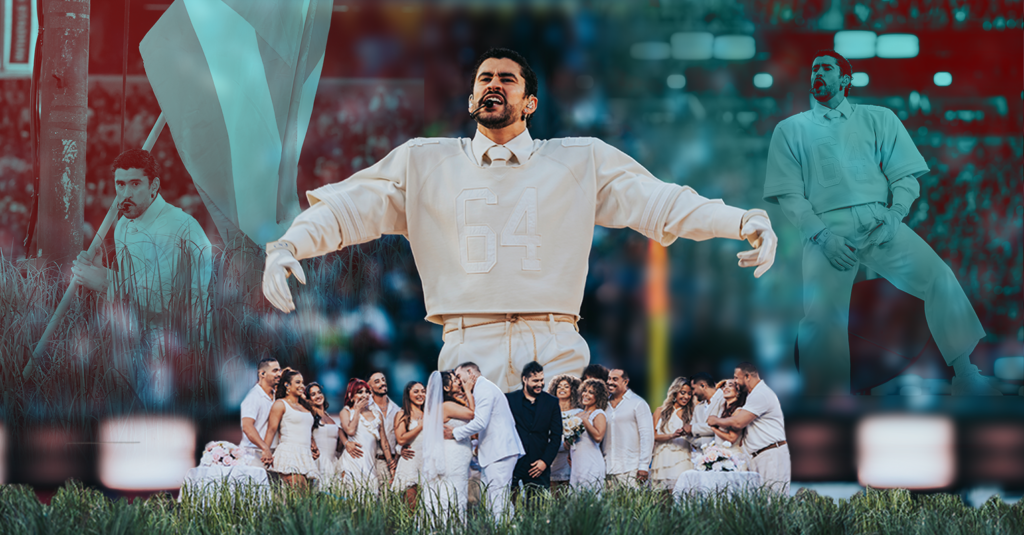
Six-time Grammy winner Bad Bunny brought energy and hope to the Super Bowl this past Sunday. The Halftime performance amassed over 128.2 million viewers, not accounting for international viewership.
Bad Bunny’s presence as the first male Latin artist to headline the Super Bowl brings forth a series of achievements for the Latino community in itself. Especially significant is how Bad Bunny’s message is relayed entirely in Spanish, save for the phrase, “God Bless America.” Though he directly addresses Latinos worldwide, he demonstrates how love for one’s own culture can be felt despite cultural differences.
Let’s Dance This “BaILE INoLVIDABLE”
Love for Puerto Rico was incorporated in every part of Bad Bunny’s performance. From the opening scenes portraying sugarcane fields and laborers were depicted working tirelessly — paying tribute to the generations whose efforts molded the nation’s identity — to the final act, when a multitude of flags adorned the stage as emblems of unity and shared pride, this year’s Super Bowl performance held profound cultural importance and was one to remember.
La Casita, a recurring icon from Bad Bunny’s current tour, is painted in a bright pink hue that stands out against the sugarcane background. La Casita is the appointed party house modeled after traditional Puerto Rican houses and has hosted various celebrities during its use for Bad Bunny’s live shows. Bringing La Casita to life within the U.S. is also important for highlighting the Puerto Rican diaspora, which Bad Bunny marks as he later transitions into “NUEVAYoL.” While La Casita represents physical gatherings, Bad Bunny shows that home can be found in people regardless of location.
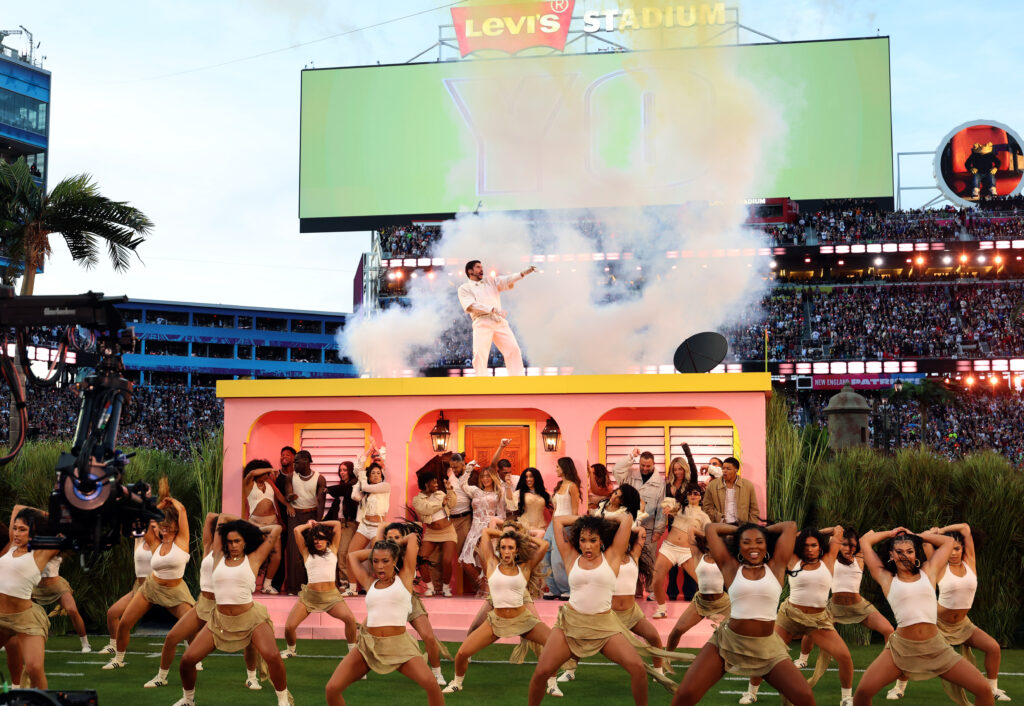
The backup dancers wore costumes designed by YOMAS, a brand owned by Puerto Rican Jomary Segarra. The clothing was detailed in style, featuring silhouettes, earth tones, and workwear-inspired elements. This reflects the clothing of agricultural workers and the traditional aesthetic of the island. They were deliberately designed to convey a more profound message of culture and politics. Segarra described her creations as “wearable pieces for Latina girlies” and noted that her work is influenced by marginalized lenses, culminating in a “very Caribbean perspective.” Segarra amplified the history of the working class and paid tribute to the island’s often-overlooked historical roots.
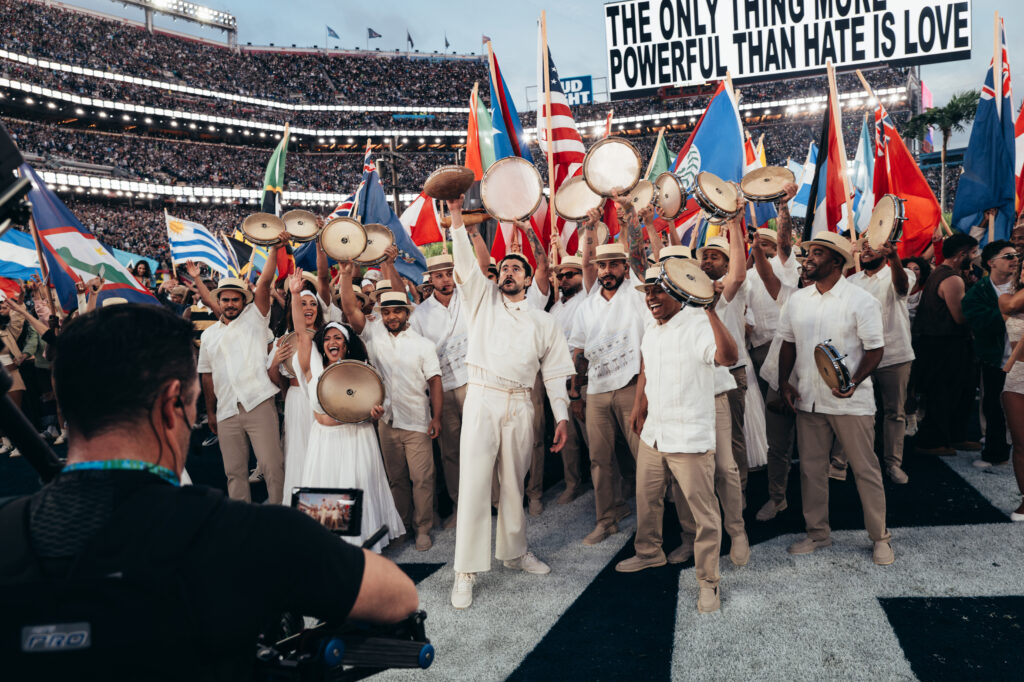
Woven through each scene of the performance is the essence of Bad Bunny’s message displayed at the end, “The only thing more powerful than hate, is love.” He demonstrates this best through hosting two major celebrations of love: a proposal in the first scene of the sugar cane field and a live wedding held on a model of an existing Puerto Rican wedding venue. Rarely is Bad Bunny caught alone, always surrounded by his community and their support for each other. During the joyful moments of family gatherings, people of all ages can be seen dancing together. Here, dance serves to express joy and is a source of strength regardless of outside circumstances.
Resistance Clad in Red, White, and Light Blue
“Here, people were killed for raising the flag / That’s why I carry it,” declares Bad Bunny in “LA MuDANZA.” Puerto Rico’s original flag, which sports a light blue instead of navy, was prohibited under the Gag Law from 1948 through 1957. Puerto Ricans were banned from possessing or displaying the flag, as its colors were associated with the idea of independence from U.S. governance. When he stands alongside Lady Gaga, the scenery is mixed with the same three shades: red, white, and light blue. What once was a sign of suppression in Puerto Ricans is now celebrated with happiness and dancing. Bad Bunny carries his flag and its colors with both honor and justice to reclaim what has been taken away from the native population.
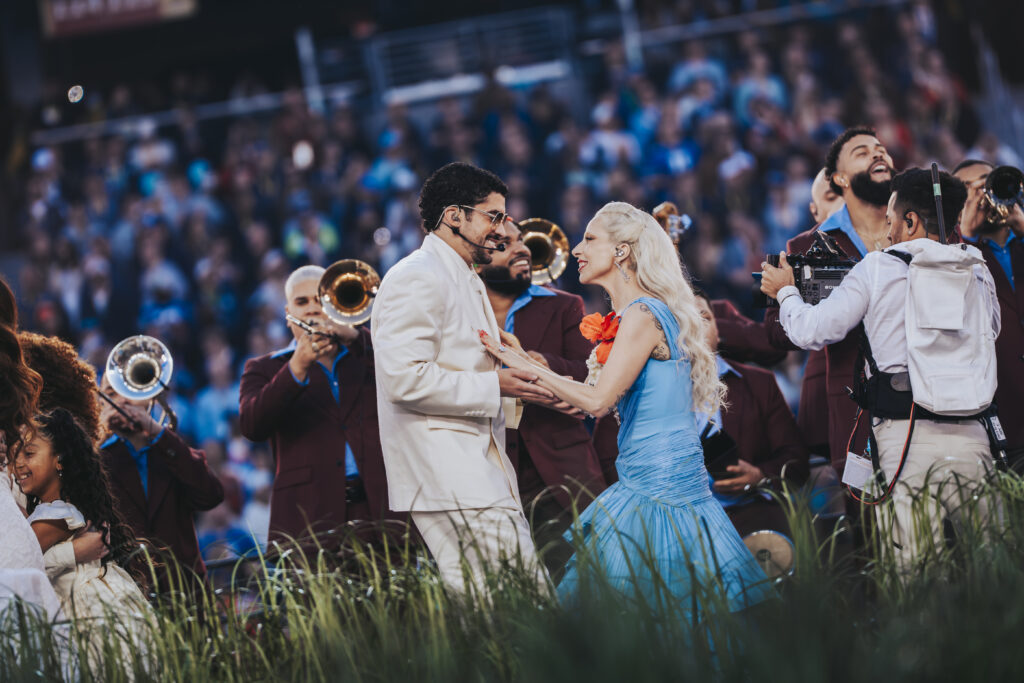
Earthy tones from Puerto Rico’s natural landscape, as seen on the Debí Tirar Más Fotos album cover, are also prominent. The ensemble’s fashion represents a blend between cultures, from the Puerto Rican homeland to the diaspora. Men wear white guayabera shirts and straw pava hats, and women wear white bomba-style dresses. Like the two stripes on the Puerto Rican flag, the white represents the liberty and role of the people in maintaining the three branches of government. Onstage, these people represent rural laborers, pillars ofPuerto Rican identity, by reclaiming imagery often overlooked and stereotyped, transforming it into an emblem of pride and resistance.
Outside of traditional clothing, during group dance segments such as Bad Bunny’s appearance atop a vintage truck, performers wore urban streetwear that mirrored modern cultural expression. Throughout the performance, the juxtaposition of traditional attire and contemporary fashion visually depicted the generational evolution of identity, demonstrating how heritage continues to influence current style and representation.
This contrast also called into question the prevailing narrative that modernization replaces tradition. Rather, it highlighted that younger generations still uphold the legacy of their communities. Those whose lives began in working-class and rural labor neighborhoods have shaped us into who we are today. They’re also the same individuals molding our modern-day cultural expression. This was a statement that heritage is not erased, instead it’s passed down and built upon.
Amid the fun and upbeat reggaeton tracks, Bad Bunny makes sure to add in a moment for serious thought. He incorporated “LO QUE LE PASÓ A HAWAii,” an anthem against gentrification and forced displacement of locals in Puerto Rico, and “El Apagón,” a track that describes Puerto Ricans’ simultaneous struggle and resilience against their constant power outages. For all the community built through the fun events, this segment reminds audiences that it’s just as important to stand together in times of hardship.
Putting the “Unity” in Community
While Bad Bunny’s performance features prominent names, such as guests Ricky Martin and Lady Gaga, the performance is incomplete through the support of the unsung heroes. The opening highlights jibaros, farm workers dating back to the era of Spanish colonization. As Bad Bunny works his way through the living sugarcane fields, he encounters other Latino figures who are pillars of their local communities. This includes cane workers, food stand owners (most being legitimate businesses), a nail tech, and a quartet of elderly men playing dominos.
Though the majority of the audience and performers at the show were adults, Bad Bunny made sure to give his attention to the younger ones as well. He handed off one of his Grammy Awards to a young boy, who represents both his younger self and the future generations to come. In his dialogue between songs, he continues to encourage the audience to believe in themselves, and to live with more love than fear.
By featuring youth alongside elders and adults, the performance created a perfect balance among the generations, yet again exemplifying the significance of culture being passed down and not forgotten. Collectively, these instances depicted portraits of daily life that felt recognizable to all cultures. In unison, this all embodied what the community looks like, not just in Puerto Rico, but across Latin American countries, making the show feel familiar and homey.
From knitwear brand owner Jomary Segarra, Los Angeles taquero Victor Villas, Puerto Rican Sign Language (PRSL) Interpreter Celimar Rivera Cosme, New York City social club owner Toñita, to the all-female ensemble Mariachi Divas, Bad Bunny shows how the spotlight should be shared. This authentic representation reminds viewers that Latinos — and by extension, immigrants — are fundamental to creating every neighborhood a diverse and welcoming place.
“¡A mi patria, Puerto Rico, seguimos aquí!” is Bad Bunny’s final shoutout to encourage joy and strength. (To my motherland, Puerto Rico, we’ll continue to be here!) The 13-minute production comes to a close as the band plays “DtMF,” and the performers’ spirits reach their climax. Bad Bunny and the accompanying crowd invite listeners to cherish the time spent together, and to let the party live on.
The authenticity of this show was what set it apart from others, the way Bad Bunny and his team made it feel intimate, rich, and meaningful. At a time when Black and Brown communities are facing challenges, the messages embedded in this performance will be remembered for years to come.
Reminiscing on the beginning of Bad Bunny’s career? Read more about his and other artists’ origins as EnVi rewinds to 2016 here.