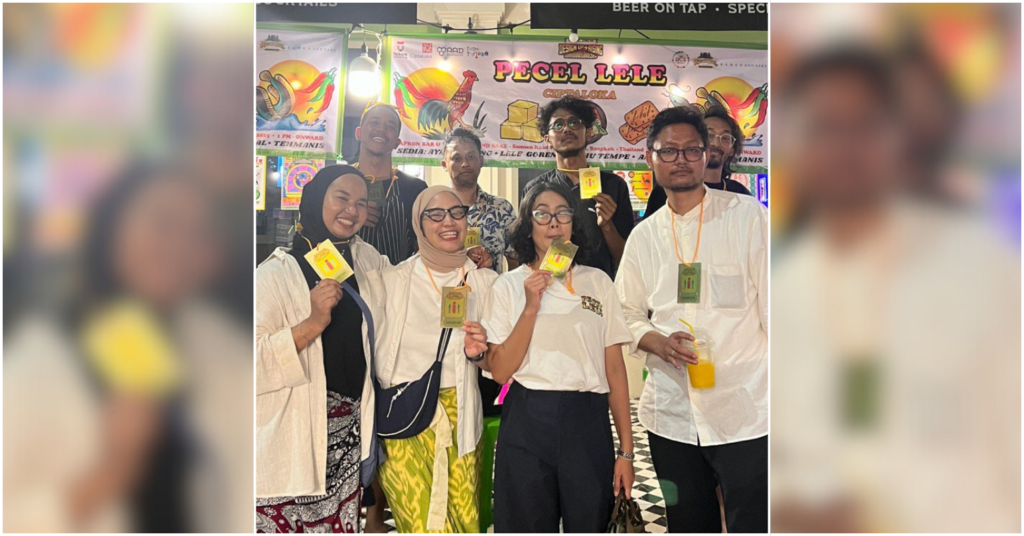
Creative Spotlight: Adriyan Huda’s Way of Self-Expression Through Visual Design
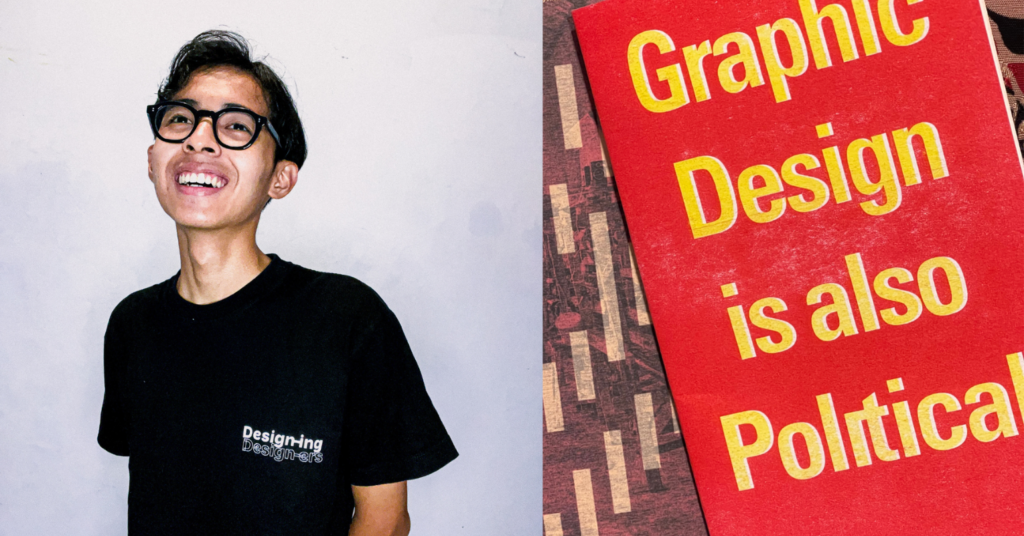
Nowadays, most of the visual objects we see are products of design. It breathes and grows with meaning and significance behind it. As shared in an essay by graphic designer Claudia Novreica, Indonesia alone treasures thousands of design objects surrounding neighborhoods and big cities that could be observed and defined – in the context of feeling a city through the lens of psychogeography.
In this Creative Spotlight installment, EnVi chatted online with graphic designer Adriyan Huda on the culture surrounding design, how it lives through Indonesia’s ecosystem, and breaking down the relationship between ethnography and design.
Get to Know the Designer, Adriyan Huda
Mukhammad Adriyan Huda is based in Purwokerto, Central Java, and is currently pursuing his studies at Telkom University. Alongside his academic journey, he has also served as Creative Director for the independent publishing initiative D.U.G Press, where he expanded his practice beyond design into editorial and creative direction.
How Graphic Design is Shaped By Local Culture
“As a designer that grew up in third cities – the relationship between community culture or local people and graphic design lies in the market’s need to use graphic design as a tool to archive and preserve the collective knowledge of local communities,” Huda said. Throughout his career in graphic design, he discovered methods for deeply understanding society: immersing himself in people’s daily lives and experiencing what they experience firsthand. “Namely, through an ethnographic approach, as I believe that every region has cultural practices preserved by certain communities. Through ethnography, we as graphic designers can also act as field researchers, with the aim of producing work or outputs that genuinely respond to the needs of local culture,” he further mentioned.
Observing Community Through Wangsul
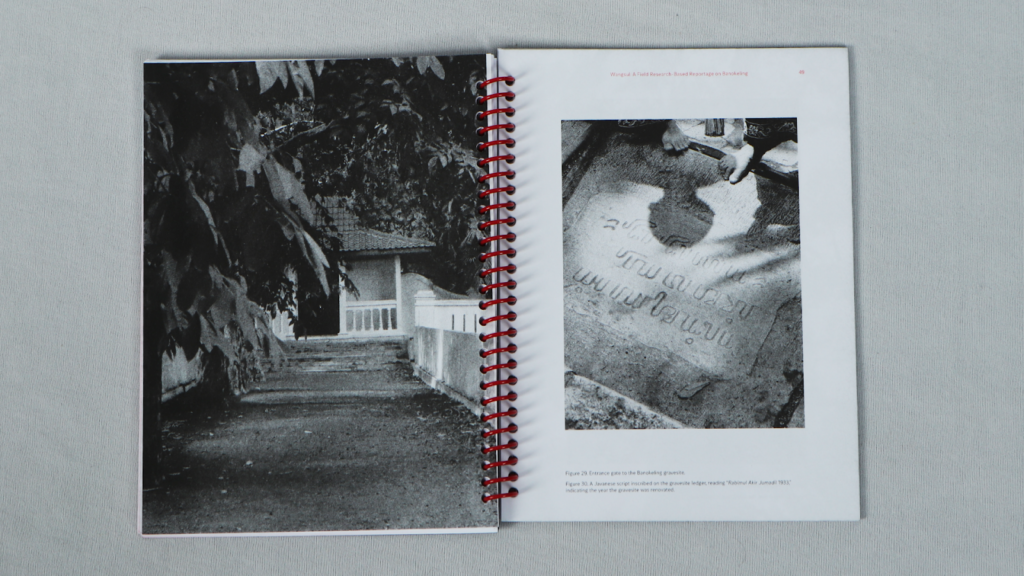
The book Wangsul is a result of Huda’s ethnographic research alongside his colleagues, Kukuh Sita Anjani and Dien Arini. This book presents the findings of their field research with the indigenous Banokeling community in Banyumas, Central Java. The final outcome of the project is an editorial design publication, which was thoroughly reviewed — both editorially and visually — in collaboration with Petrikor Books as part of their Stoodent Series program.
“In the context of Wangsul, we chose the book as a medium for information and archival documentation, capturing how the Banokeling community lives and how they relate to their surrounding environment. They hold a deep belief in the power or energy of a place. To modern society, this may appear mystical or outdated. For me, however, it reflects an ancestral way of preserving nature — evident in how they continue to protect centuries-old trees in the area surrounding the tomb of Kyai [Muslim scholar-leader] Banokeling,” Huda shared.
Inside Graphic Design is also Political & How Design is Documented
Graphic Design is also Political is a zine created by Huda as part of his cultural studies coursework. Through this project, he explores how cultural studies can be articulated and translated into the language of graphic design, positioning design not merely as a visual practice, but as a critical and reflective medium.
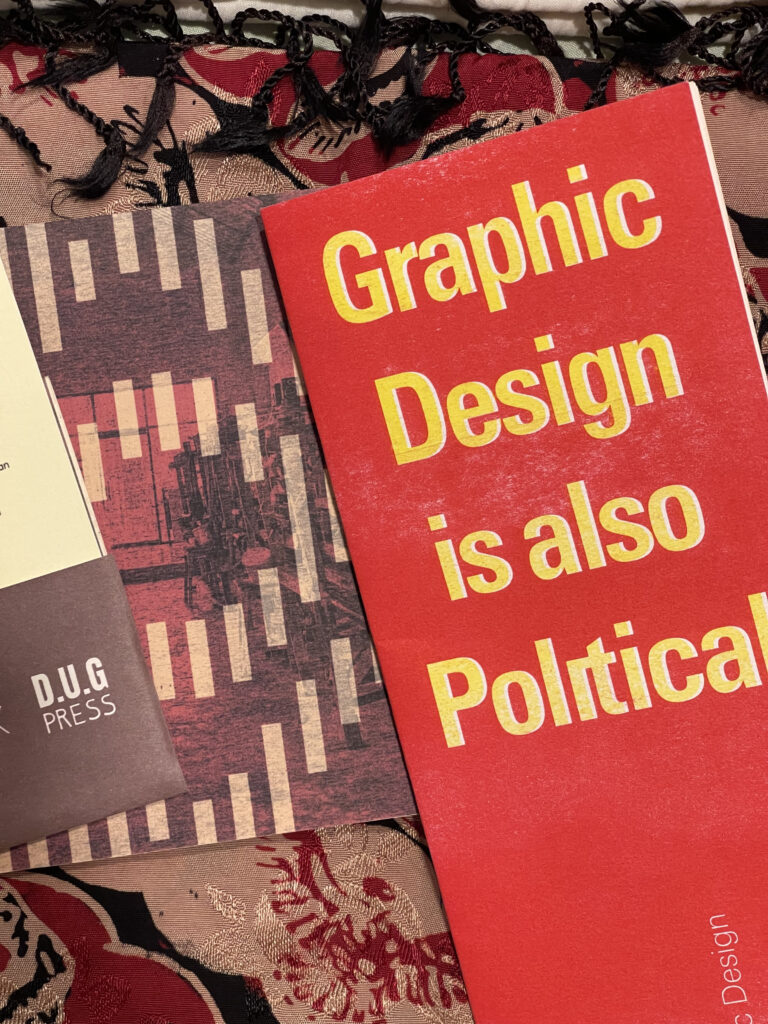
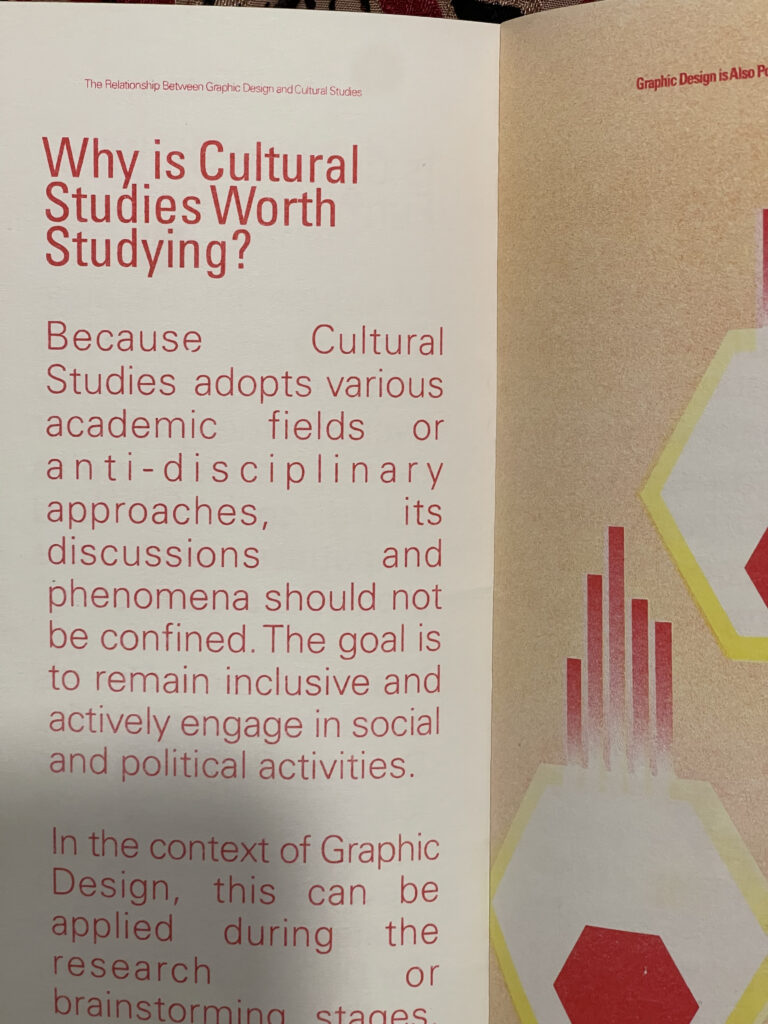
According to the zine, the aim of cultural studies is to remain inclusive while actively engaging with social and political realities. In this context, cultural studies can be applied to graphic design through research-based practices, such as the Wangsul project.
Graphic design also serves as a cultural documentation for various ethnics and cultures – traditional and modern. “To sharpen our sensitivity to our surroundings and help archive existing traditions — because we never know whether a particular community will continue to exist in the future. The cultures that need to be archived are not limited to folklore alone. New cultural expressions shaped by today’s younger generation are also part of what should be preserved,” Huda shared.
He further mentioned that taking on that role is not an obligation; however, those who dare to do so can be seen as the coolest people in the world. According to Huda, designers, by nature of their practice, are encouraged to collaborate with fields beyond their own ecosystem, as this is where they are needed most: acting as intermediaries between society’s needs and the facts and realities on the ground.
What Adriyan Hopes for Graphic Design in Indonesia
“The hope is that graphic design will not be seen merely as a commercial tool. Instead, it can help fill the gaps in building collective awareness to shape the cities and regions we aspire to live in — the city we can afford to live in — places that embrace difference through more human-centered system design,” Huda said.
Huda also shared that in this sense, graphic designers should approach city-making much like they approach communication design: crafting systems and messages that resonate with their intended audiences and ultimately encourage the actions envisioned in the design strategy.
In search of more design books? Check out EnVi’s review of “Harmonisasi|Harmonizing” here!