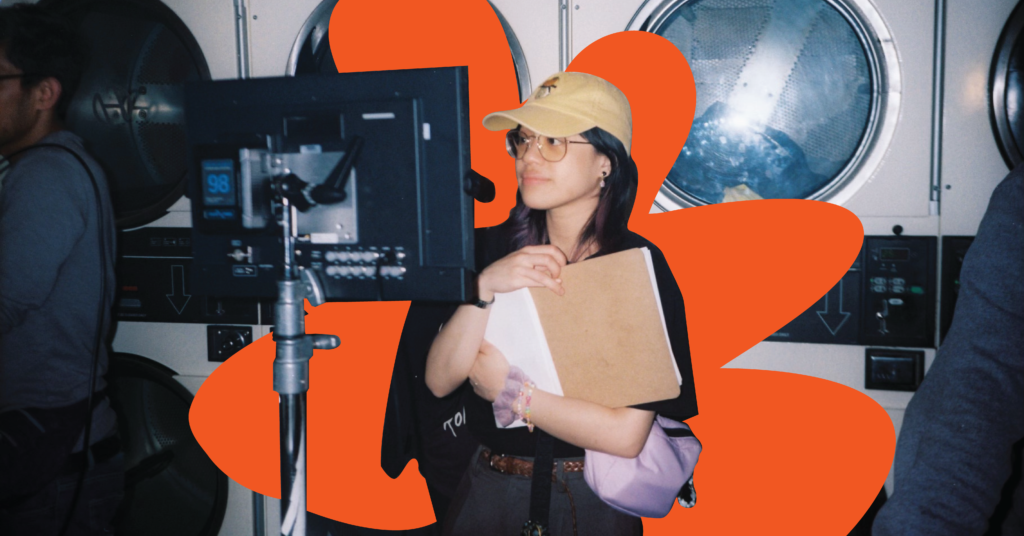
Many people are used to interacting with film as a consumer: carefully obscured green screen, immaculate sound and set design, and an actor du jour making a bid at convincing audiences that they are the character on the screen. But it’s the messy internal mechanics of filmmaking, the part helmed by the director, that really crafts a storyline — defining the themes, choosing the edits, and carefully pruning the work to reveal the film’s true form. This is the space Margarita Mina inhabits.
A third-year student on the directing track in Stony Brook University’s Film MFA, Mina is already being recognized for her intimate, dream-like approach to filmmaking; films that focus, especially, on the Filipino experience. Her latest film, Baby Fat, has already earned recognition from industry giants like Rolling Stones Philippines. The film provides a unique snapshot into childhood, struggles with body image, and unpacking the novel idea of wanting to shrink inside a laundromat dryer.
Over Zoom, EnVi caught up with Margarita Mina to discuss Baby Fat, her trajectory as a film MFA student, and what she has coming up next.
A LIFE IN MOTION
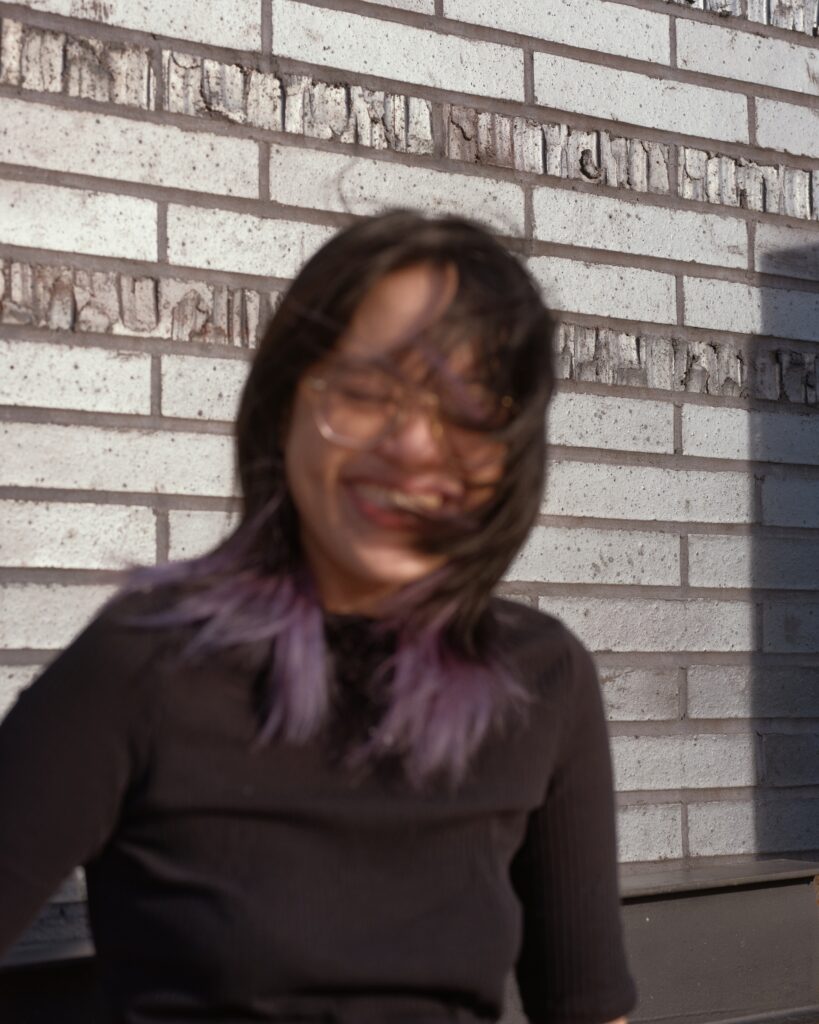
From an early age, Margarita Mina found herself immersed in film. “ My dad loved watching films. That’s how I started getting into film,” she explained. During her time as an undergraduate in the Philippines, Mina studied film theory and mass communication before deciding to cultivate her creative skill in filmmaking.
“I was working for about seven years before I was like, I wanna know about the Filipinos outside the country. And that’s what made me decide to pursue my MFA. I’ve always wanted to go to New York, so I thought it would be the perfect chance for me to explore the United States and meet other Filipinos.”
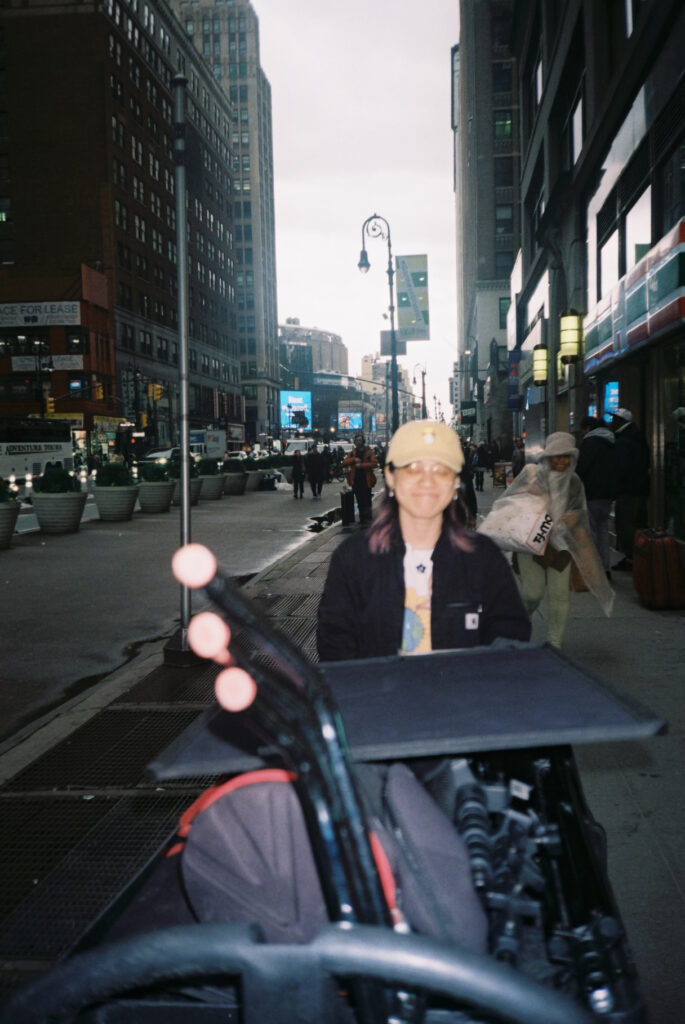
Moving across the world to pursue a dream isn’t easy. Since she had no relatives in the United States, Mina was keen on finding a Filipino community after settling in Brooklyn. Having been active in women’s rights groups and Filipino rights groups while in undergrad, she reached out to the groups nearby her in Queens.
“I met a lot of women who are Filipino and were born and raised here, so second generation, and a lot of them couldn’t speak the language. They do understand it because it’s become like a household language, but […] in their mid twenties now, it’s something they’re actively trying to learn. And it’s just sad, I guess, because their parents had to [come] here to work and live like the ‘American dream,’ whatever that means, so they never really had the resources and the time to teach their kids the Filipino language. Because of that, they felt like… disjunct from their culture, and like they were in a space that’s not entirely theirs.”
Mina found a connection in this strange liminal space that the Filipino-American women she met seemed to occupy — after all, she occupied it too. “I was coming here where I had to speak a language that’s not entirely my tongue,” she explained. “I also felt like an in-between, almost — like I felt like the people, the Filipinos I’ve met here, and me as a Filipino who had to move to America, were all aliens and stuck in this in-between.”
Mina’s introspections actually closely resemble a Filipino psychological concept known as Kapwa, or a shared inner self. The concept is based on unity between one’s inner self and others, relating to each other in a way that cannot be obtained from an individualistic point of view. An in-between space where others feel the same joys, fears, and understanding — similar to the one Mina explores in her work — is a real world example of this concept.
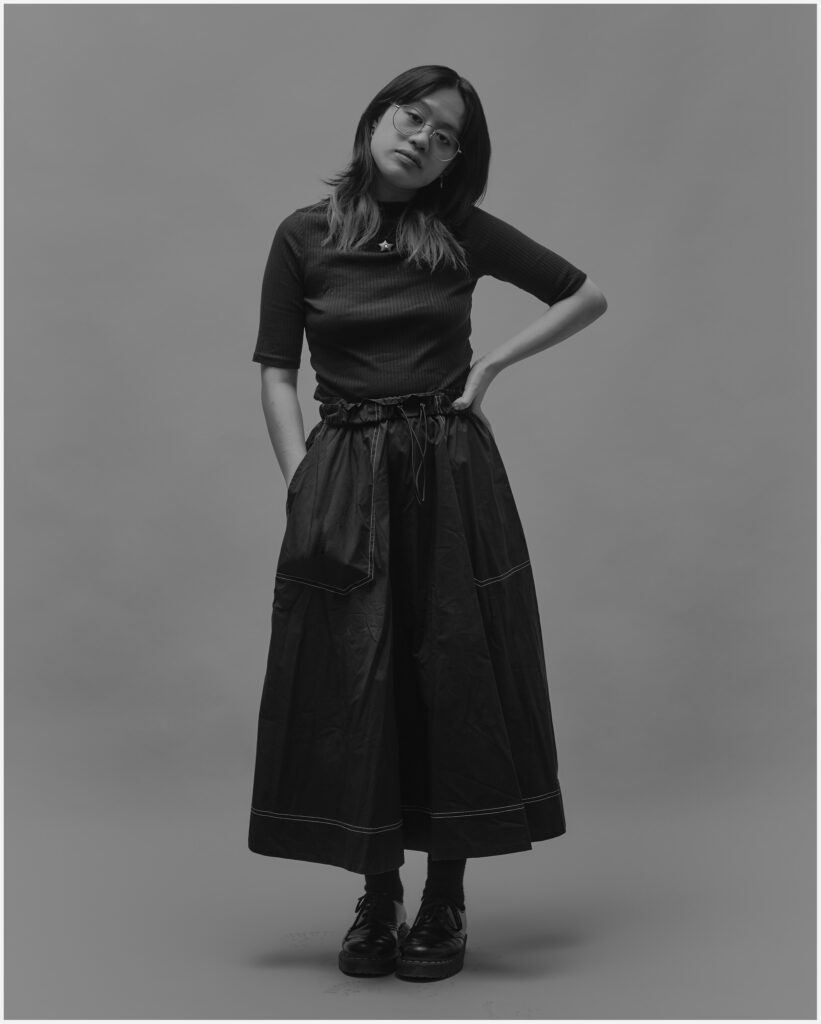
Beyond being a director, Mina is also a multihyphenate — she utilizes skills from multiple fields, including social sciences (anthropology and psychology) to make connections and begin building a concrete idea of the work she wanted to write and film. Part of this work included reframing Filipinos through their own eyes, not through preconceived media stereotypes of how they have been portrayed.
“In mainstream media, a lot of the roles of Filipinos are made by Westerners. We’re very much caricatured into a stereotype of, you know, nurses or cheap labor, which does exist. But I was curious about finding, more so, the stories of these people outside their own professions.”
ALL ABOUT BABY FAT
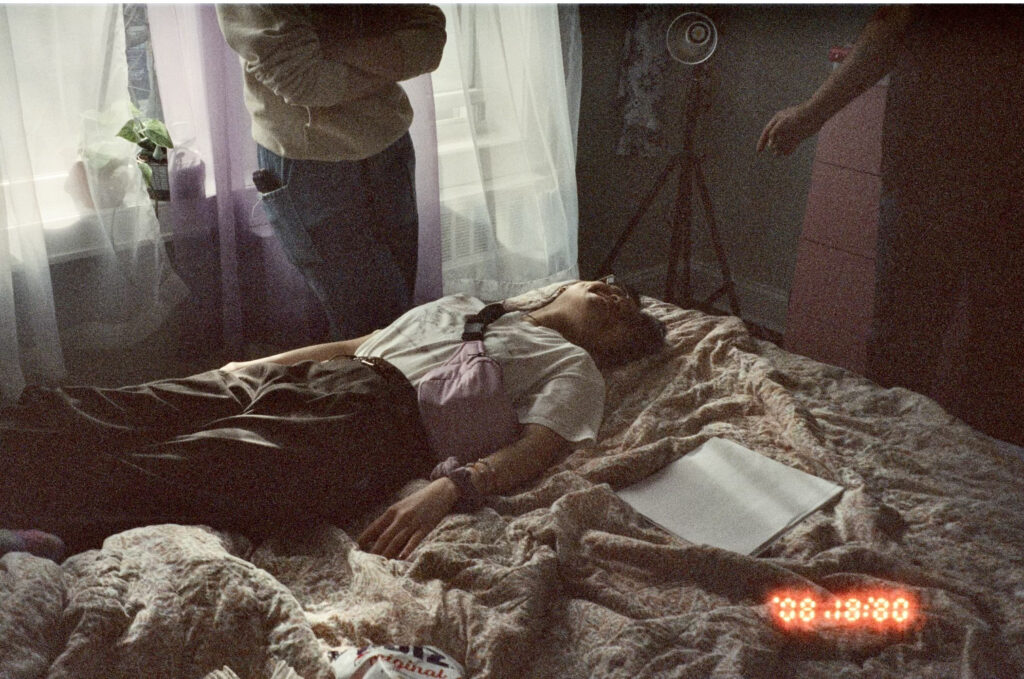
Baby Fat (2025) is Mina’s first year MFA film — a script that she wrote about four months into her move to the United States, and one that she describes as a “very small scale project.” “ It was mostly just like me and my best friend doing a lot of the logistics… it was a very DIY film,” she said.
The short film follows a stocky young Filipino-American girl (Hannah Barry) who accidentally spills ketchup on an heirloom dress, and then accompanies her mother to the laundromat to try and clean it. The film uses this situation to tackle issues like body image, loneliness, and isolation.
The idea for Baby Fat came from Mina’s experience visiting an American laundromat, a completely different experience from the laundry machines she was used to in the Phillipines. Here, she had to carry her clothes seven minutes to a laundromat and wait for two weeks worth of clothes to wash — which led to her spending a lot of time in laundromats, waiting, watching the machine, and thinking.
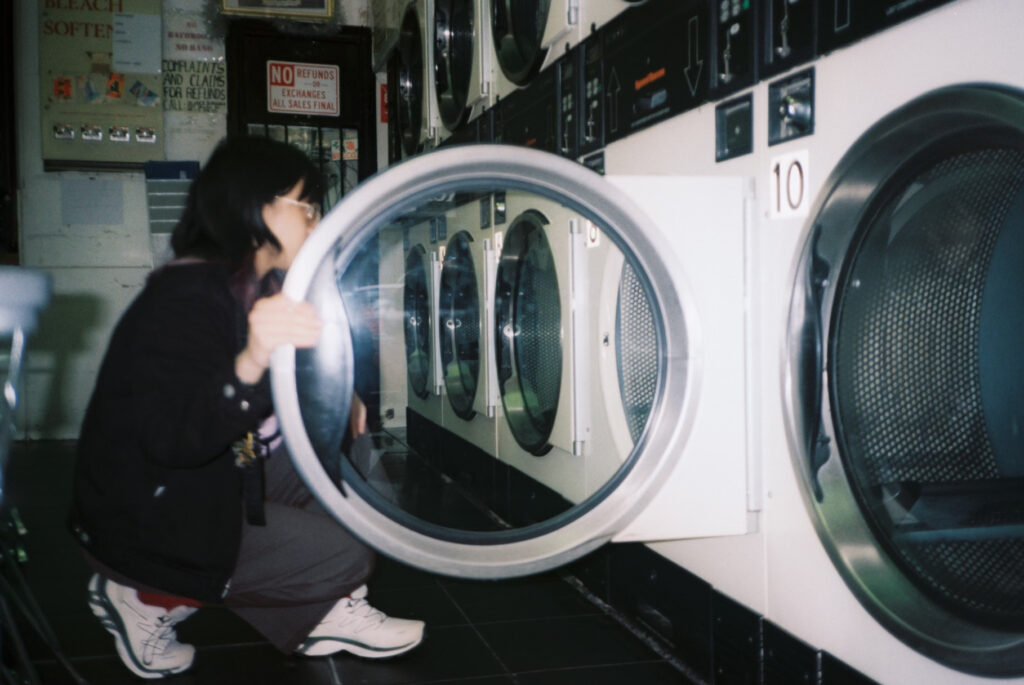
“On one hand I felt, like, super adult, but on the other hand I remember just being in laundromats a lot and feeling like, oh my gosh, I feel so tiny in this city where nobody knows me, which is both exciting and scary,” Mina said; that feeling, of being small in the quiet of a laundromat, helped spark an idea. “I’ve always just had this idea of like… sometimes I wanna go inside a dryer and just shrink. The image of me going inside a dryer — that’s the kind of image that stuck to me. And then that connected with the Filipino-Americans I’ve met here, who also feel that same kind of wave; they also wanna go inside dryers and just shrink sometimes.”
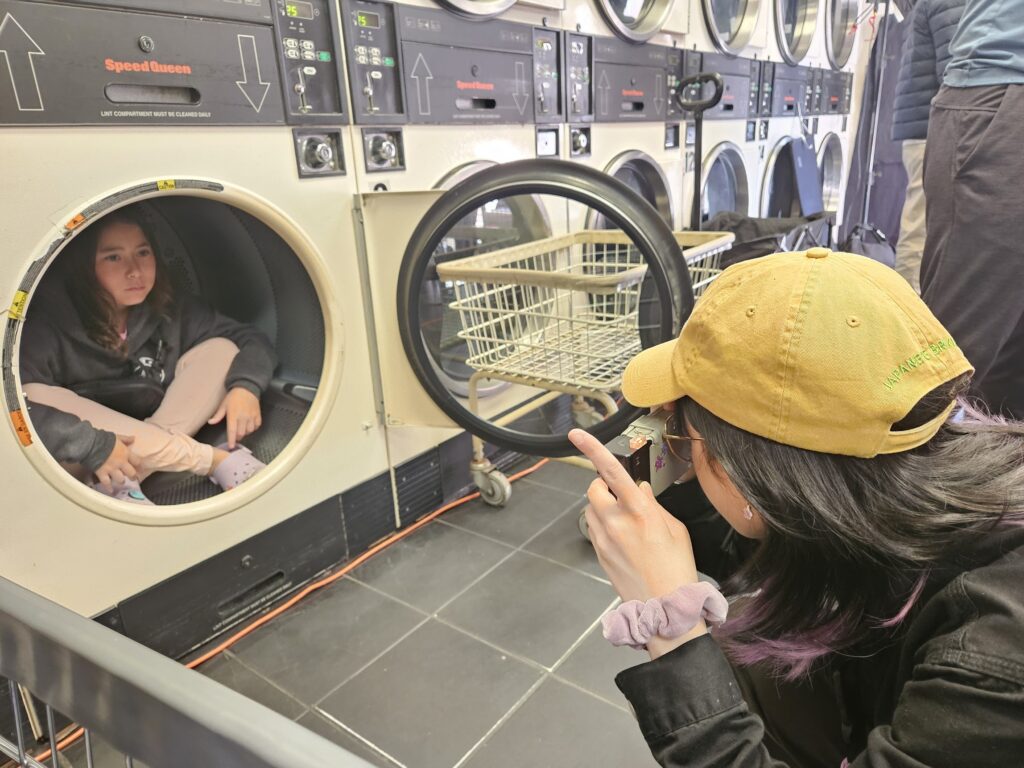
This idea eventually combined with other experiences and ideas — Mina’s experience growing up with baby fat in the Phillipines, where body image is a big thing and people commented on your body, and the awkward tween/teen experience.
“When you’re a preteen and you do have baby fat, it is something that you will eventually overcome because you grow taller. It’s just like normal to have baby fat; it’s the awkward phase of preteenhood and teenhood,” Mina said on the plot. “So connecting those feelings of awkwardness, being in between, and [those things being] eventually something that you will overcome — I like those desires and feelings and I tried to connect it into the film.”
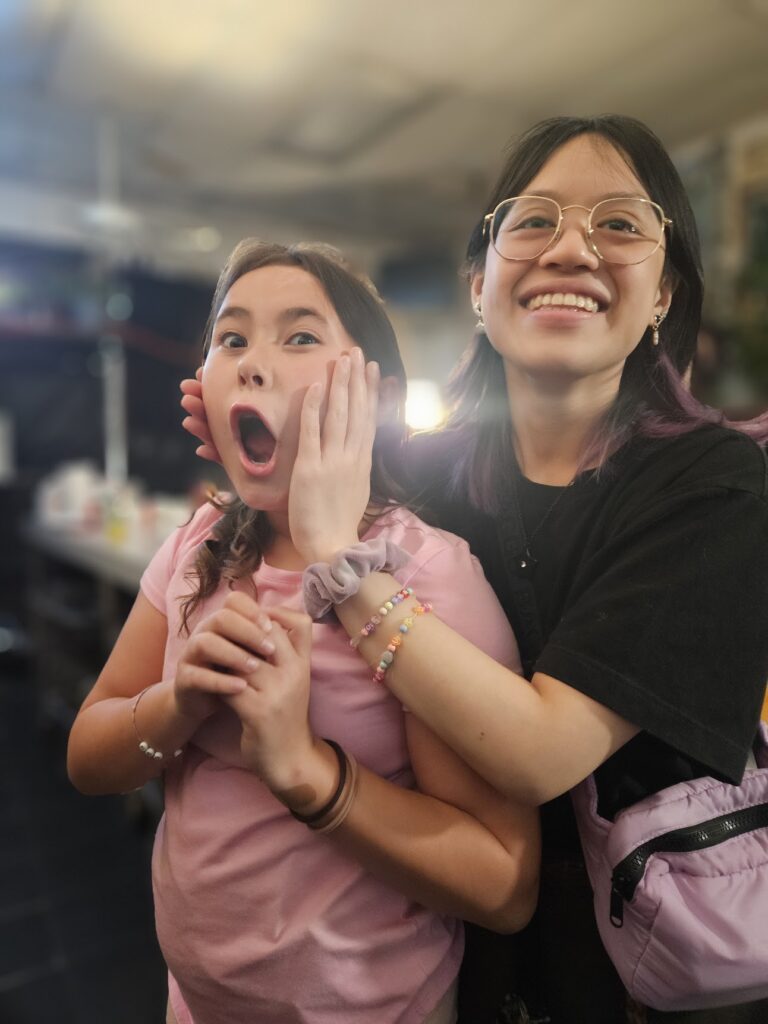
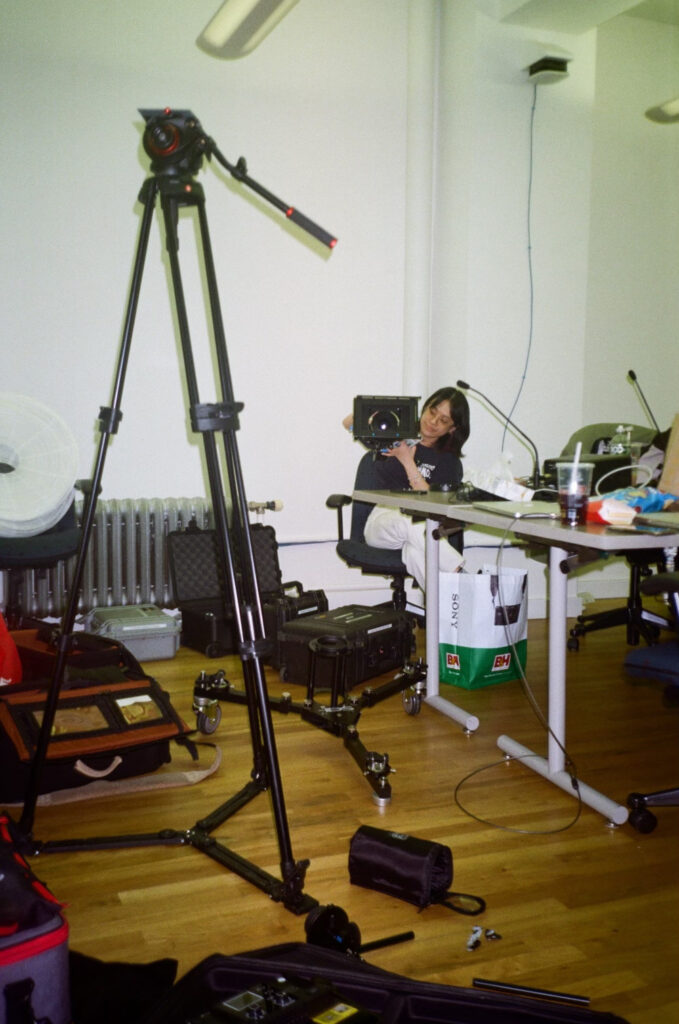
Because of a limited amount of time to make the film, things came together quickly, with Mina writing the script in December and then shooting it in April, all while taking classes. Something that Mina described as a “non-negotiable” during the process was ensuring an all Filipino cast — something she achieved by reaching out to aunties and uncles on Facebook, who are “connected to everything,” to ask for anyone they could recommend, preferably female. The process was difficult; finding cast and crew members took around four months, and having a crew of just ten could be a struggle, but the team pulled through. There was a lot of heavy lifting — some of it literal, Mina stressed, thinking about the heavy film equipment.
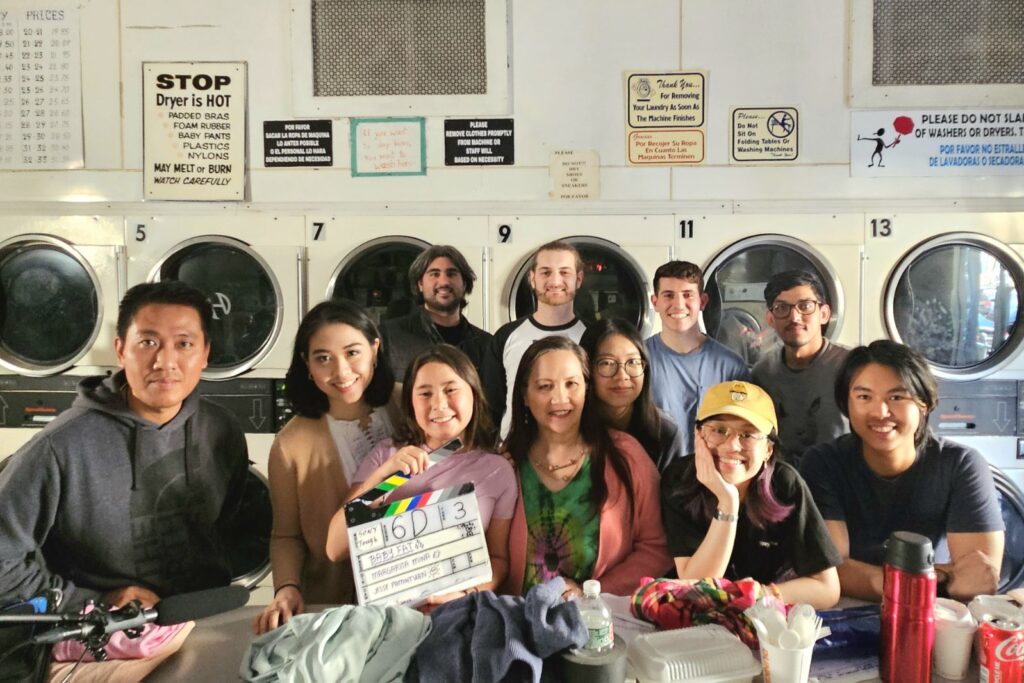
“It’s something that I had to do within maybe six months, less than a year of me arriving here, so it was very overwhelming. A lot of tears were shed. But I grew stronger because of it, I’d like to think.”
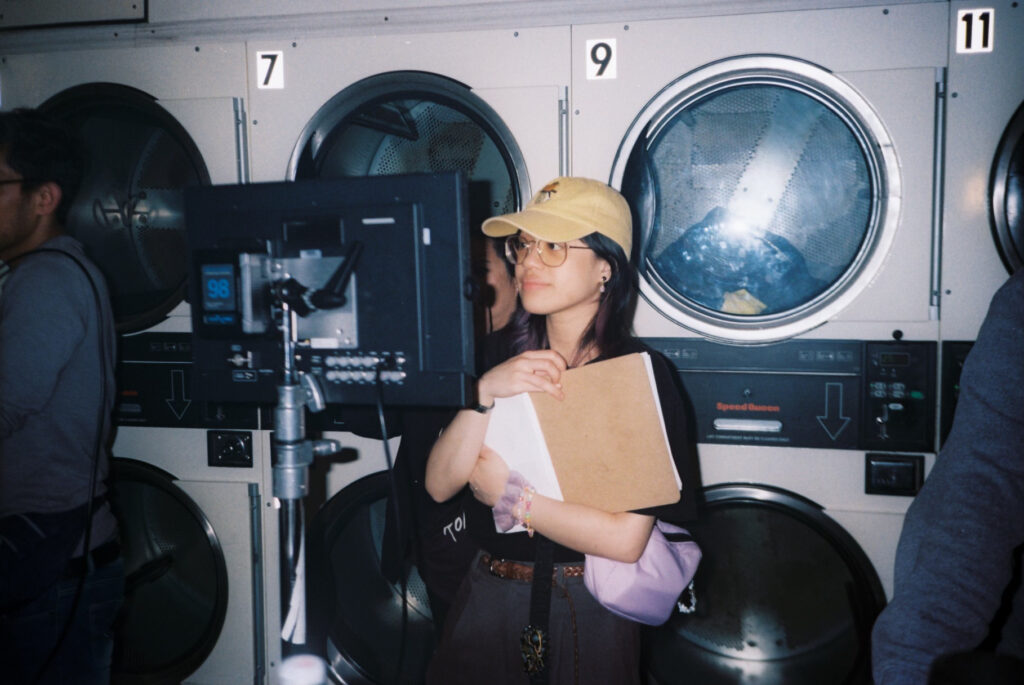
Baby Fat is still on a festival run, so it is not currently available to watch online. However, it will be shown at a number of short film festivals throughout the year. Be sure to keep an eye on Mina’s social media to see upcoming events.
THEMES AND INSPIRATIONS
Margarita’s work is shaped by a number of different factors — including, as previously mentioned, the “in-between,” transitory moments where people move from one stage to the next. Like a true academic, she delves into her topics from not just the curiosity of learning more about it, but analyzing it.
“ I love sciences, so even when I do make my own films, I tend to read a lot of material. Not just fiction, but a lot of research, paper academics. When I was working on Baby Fat, I read a lot about the diaspora that exists here in the United States. I would meet these people, do field work, and try to interview them.”
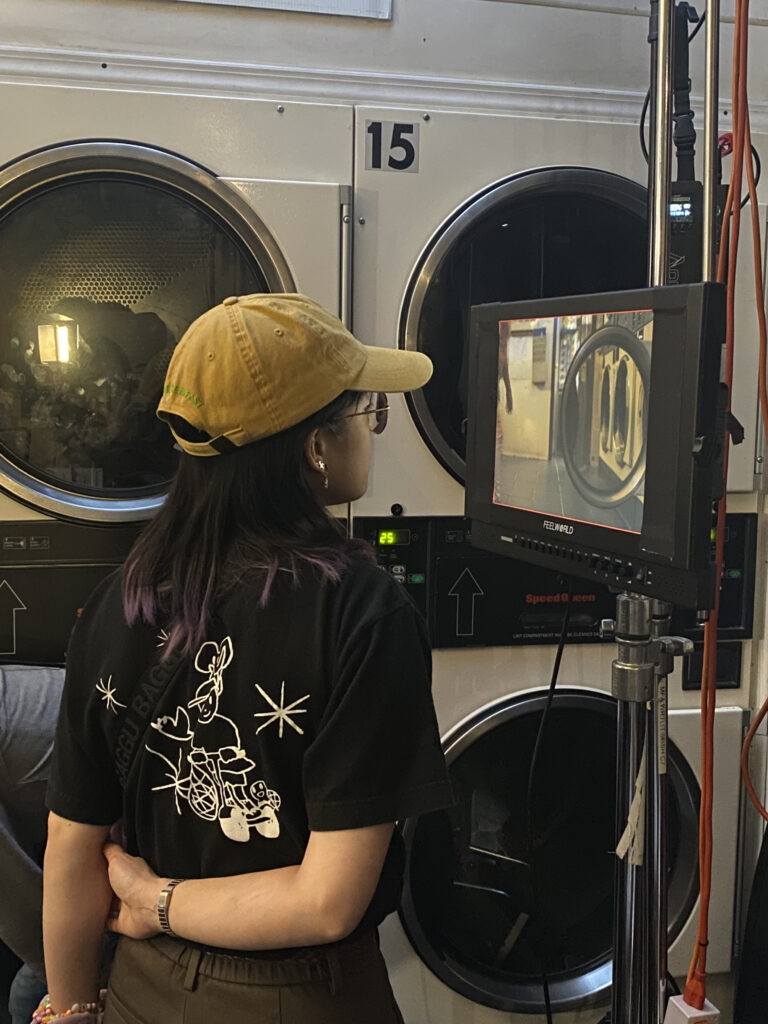
She finds herself especially interested in gender studies and child development. “As a child and as a woman — it’s so hard being a woman, but imagine being a child as well. It’s just so difficult. Children especially, as they develop, we have the power to shape them. They’re so complex.” As a result, much of Mina’s work examines that intersection between being born a woman, but also being a child — growing into societal expectations or growing away from them as people are shaped by life.
“ I really love talking about the positive weirdness, the intricacies of the female identity, like menstruation, menopause… things that are so normal to us women. I also try to put my inner child in everything, since there’s so much power in your inner child. It’s when you are at your most vulnerable, most honest, most unjaded, and most hopeful, I think,” Mina said on finding inspiration. “I always think that adults are like tall children and children are like small adults. I respect children; they are just so knowledgeable, and I feel like we lose a lot of that when we grow older. So a lot of what I make is like quirky, atypical coming of age films. Because I don’t know, that’s how I see things, and I think that’s also how I present myself.”
Creatives are also inspired by the media they consume — though time spent working on their own projects might take away from time to work through a backlog of shows. “I wish I could say that I watched Heated Rivalry!” she said with a laugh (she’s been doing a lot of writing on her current project and her thesis, which has left little time for TV).
Margarita’s current favorites? Beautyland by Marie-Helene Bertino (“Such a good book”); Mary is Happy, Mary is Happy (2013), a Thai film that she describes as her favorite movie of all time (and one she rewatched recently for inspiration); and the Filipino band Memory Drawers.
A PATH FORWARD FOR ASIAN FILMMAKERS
Asian representation, especially in the film industry, has grown a lot in the past decade; however, there’s still a long way to go, especially when it comes to casting. Mina mused that part of this is because of what social media and bigger publications choose to spotlight: things that are Western and mainstream.
Still, she emphasized that “we exist, and we’re a lot” — people have stories to tell and are making progress towards having those stories be heard, seen, and experienced, even if it is not fully reflected by the media at large.
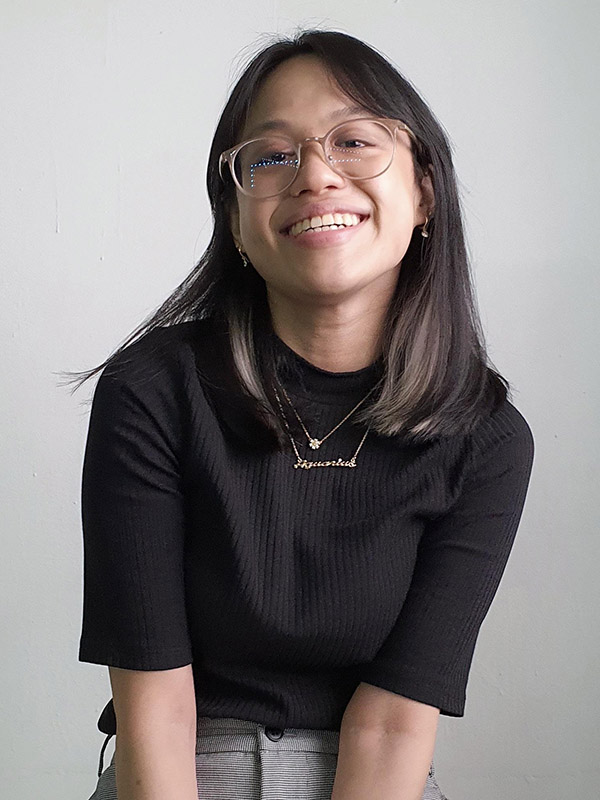
When asked for what advice she might have for young and aspiring Asian filmmakers, Mina had to think for a moment. “What’s a non-cliche way to say keep going?” she asked with a laugh, before focusing in on an integral part of creating art: actually creating art.
“It’s hard. But one of the things I live by is that you’re never going to get better at something you don’t actually do. Being an artist, my team is like, oh my God, she’s so cool. She’s a cool person. A lot of the time I don’t really feel that ’cause it is also work, but, you know, I still keep doing it. I do it crying, even though it’s hard.”
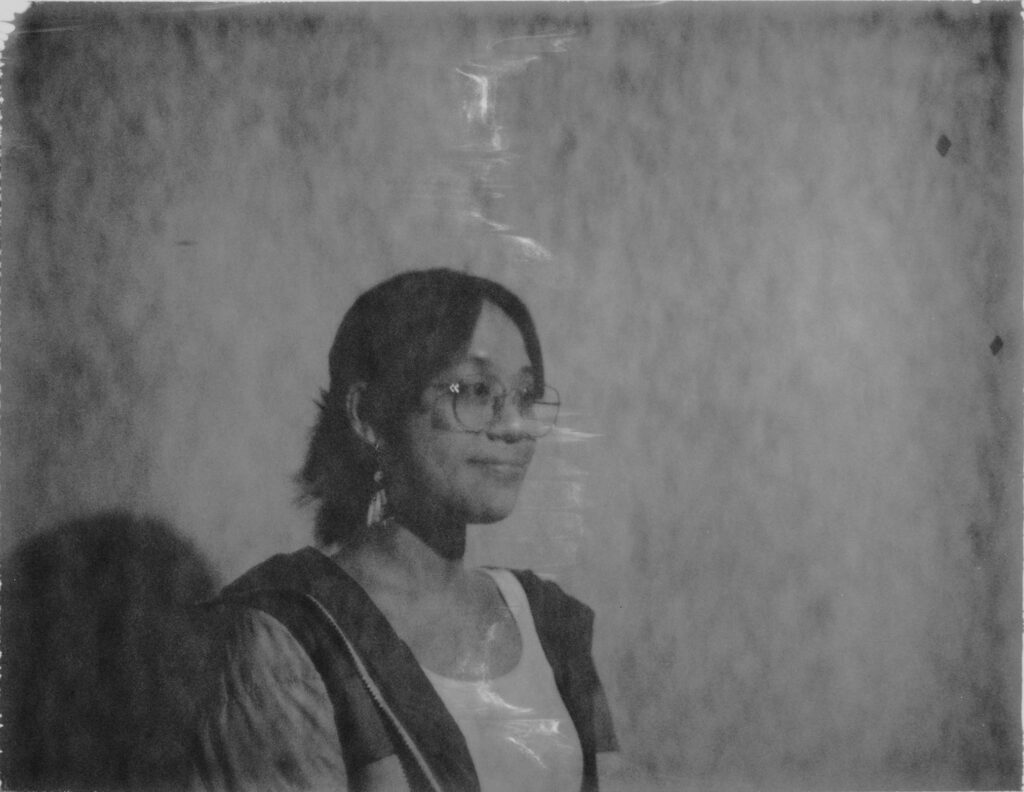
As for what her long term goals are as a director, Mina isn’t exactly aiming for the Oscars.
“ I just wanna keep making things that are authentically me. I don’t really pay a lot of mind when it comes to the Oscars. That’s not my goal. I want to show my work in festivals, but, at the end of the day, I want to make something, I want to share the things I see in a way that only I can see [them], and I want to make the 12-year-old me proud of who I am now.”
Mina would also like to create things that affect people positively — as well as continue to make films, both in the Philippines and around the world, that reflect Filipino stories and culture. “ I just wanna meet all the Filipinos that exist,” she laughed. “It’s so cool. Just, there’s so many cool stories that we have and are not aware of.”
WHAT’S NEXT?
Mina is currently editing her second year film, which her professor has described as “a sister of Baby Fat.” Focused on a 16-year-old Filipino-American girl, the film explores some of the same themes as her previous short film, including “ women coming of age, [and] being Filipino here in America.”
In the meantime, Mina continues to do what she does best: tell authentic stories, even if it’s hard, even if it’s difficult.
“That’s the thing that I always tell people when they ask me, how do you do it? I’m just like, it’s hard, but just do it. Crying and whining and complaining a lot — do it. Do it crying and whining, but just still do it.”
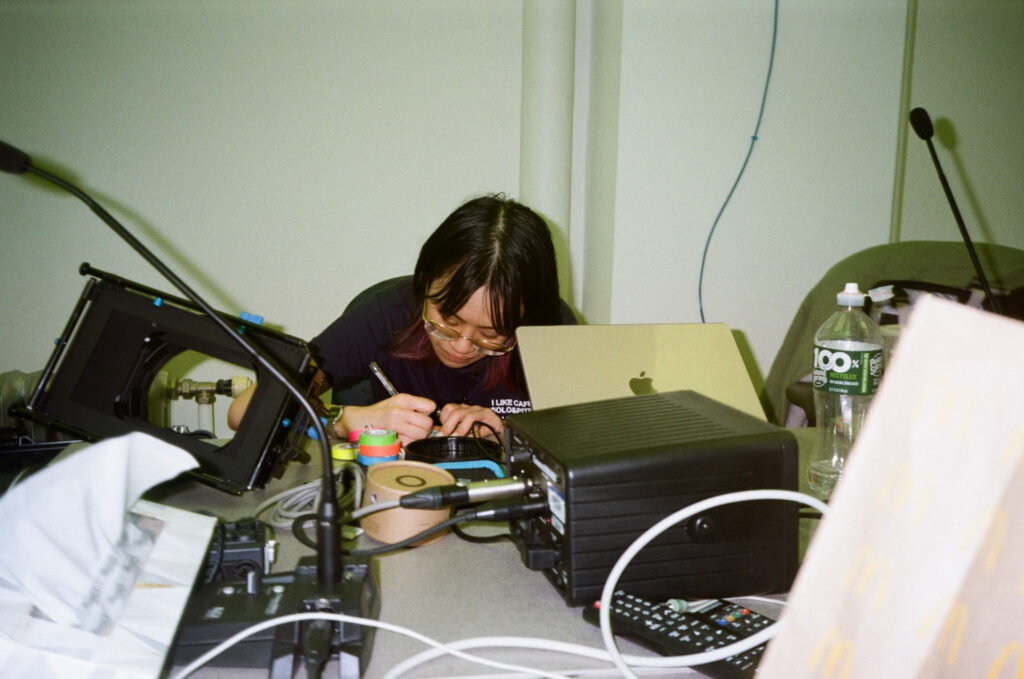
Follow Margarita Mina’s Instagram and visit her website for more information on upcoming showings of Baby Fat and other projects. Follow Crybaby Productions to see work from both her and her best friend and collaborator, Xiaoxing Chen.
Interested in learning more about creative projects and events crafted by Asian creatives? Read our article on how mahjong builds community across generations next!