Small Business Spotlight: How GON Vintage Is Changing India’s Secondhand Fashion Scene
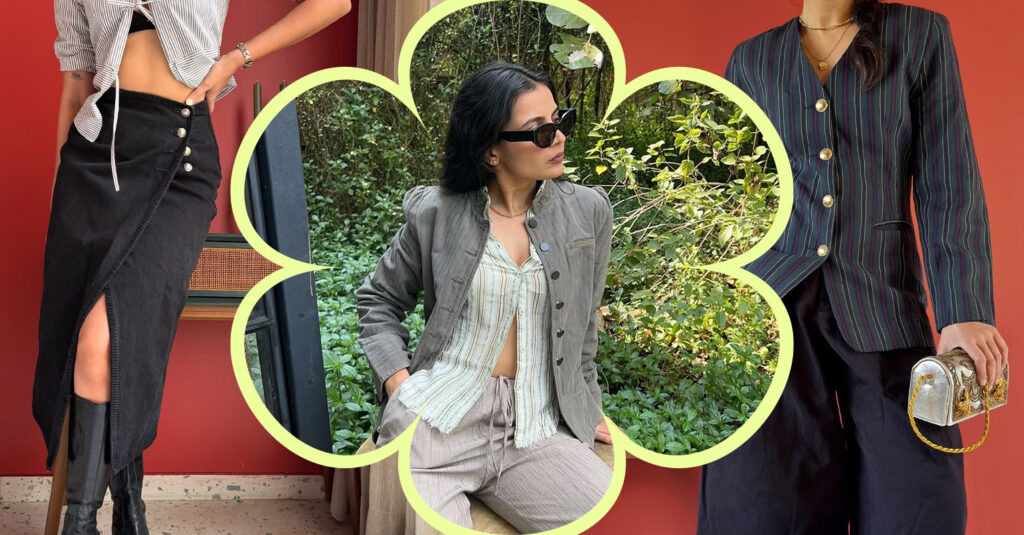
For many fashion enthusiasts, vintage shopping is trendy and cool. For Shreya Jain of GON Vintage, it’s a lifestyle — one that she has been steadily building over time.
Based out of Pune, India, GON Vintage is more than a tastefully curated online vintage shop. The brand stands for sustainability beyond just the buzz, and holds a deep reverence for well-made clothing and antique collectibles. At the heart of it is founder and curator, Shreya, who started her collector journey at a Sunday farmer’s market in Milan, where she was studying fashion design at university.
EnVi caught up with Shreya over video call to discuss everything from the inception of the store, to her favorite curation anecdotes and the perception of vintage fashion within the Indian consumer landscape.
Age-Old Roots
What started as a Depop shopfront has slowly grown into one of India’s most aesthetic online vintage stores, but the roots for GON are buried deep into the founder’s psyche. As a child, Shreya was fascinated by her father’s collection of antique trinkets and collectibles. She held a deep adoration for fashion design growing up, her first project being custom dresses for her dolls. Shreya stumbled into this field through a cosmic pull, and because of her natural affinity for all things aesthetic — having switched gears, from healthcare to fashion styling and then to fashion design and vintage curation.
Good Old News
The inception of GON happened in the midst of the pandemic in 2020 when Shreya was still in Milan. Having collected a wardrobe full of vintage clothing, she figured it was best to start listing out some, since she had amassed more garments than she could’ve worn. Her first sale came in March, 2020, the fulfillment of which was unlike anything she had ever felt before.
When deciding upon the name of the Depop shop, a saying that called out to her was “Old is gold.” Shreya wanted a name that was direct and “feeling-forward,” which is exactly how she describes her personality. She wanted the name to emphasize how the general population had now begun to look at old things, as kind of cool, and in some ways new. Eventually came up Good Old News, a name laced with intent and a nice ring to it, becoming the shop name that went up on Depop and on Instagram later with the acronym GON vintage.
A Wardrobe Of Curated Vintage
Being a venture that is extremely close to the founder’s heart, the curation at GON feels like an extension of her personality, taste and personal style. Shreya tells EnVi, “A ground rule for me has always been to only curate pieces that personally I would wear and that resonate with me,” leading to a curation that is as carefully acquired as her own wardrobe. She only sources collectibles she sees value in herself — a fundamental fact that sets the curation apart from other thrift stores in the market. It allows buyers to save time from having to sift through an extensive stock. Keeping in mind quality tailoring and fabric composition, GON stocks clothing pieces with more natural fibers and as less polyester as possible, opting for polyester manufactured in the 80s or before.
Having a background in styling and being able to pick up on micro-trends, allows Shreya to curate pieces that are vintage but feel current, owing to the cyclical nature of fashion. Her curating decisions are not influenced by the tag of a luxury brand, rather they are driven by her personal style sensibilities and the intention behind a particular piece.
Sourcing Anecdotes
Being a vintage curator means you amass a lot more than just collectibles from around the world. When asked if she had any sourcing anecdotes to share with EnVi, Shreya’s eagerness was palpable. She explains, “The beauty of all of this is also the relationships that you build with collectors — to sit down with them, to hear stories about who they are, where they’re from, why they’re doing what they’re doing, how they stumbled upon all of this stuff and then getting into the nitty gritties of each piece.” On a sourcing trip to Japan last year, she stumbled into an odd little trinket shop run by an old couple. Peeking under a pile of stuff was what seemed to be a 1920s steel watch that caught Shreya’s attention, much to the owners’ surprise. The owners explained how a man had dropped off the watch, his mother’s, almost a year ago in exchange for just enough money to put food on the table. Something about the watch deeply called out to her and she knew she had to have it.
Upon getting home and sharing the rare find with her father, they decided to inspect it together under the eyeglass, only to discover that the watch is probably valued at 10 times the value she had paid for it. It had a white gold finish, with diamonds and an alligator strap. Choosing to not sell it, the watch now remains a prized possession in Shreya’s personal collection.
The Perception of Vintage In India
When it comes to secondhand clothing and collectibles, India occupies a unique position as compared to other cultures. On one hand, secondhand clothing is an intrinsic part of the culture — upcycling old clothes, whether that’s reworking heirloom silks or making blankets out of used baby clothing. Inversely, as India grows economically and adopts a more Western approach to wealth and showing it off via fashion, wearing someone’s old clothes is looked down upon. “I think India is a growing country economically, and people feel like wearing old [clothes] puts down your economical or financial image,” Shreya explains.
From her observations as a vintage shop owner, she shares that the so-called trend of buying vintage fashion was at an all-time high in India, between 2020 and 2021, coinciding with the height of the pandemic. The secondhand market saw a massive dip from 2022 to 2023, characterized by post-pandemic “revenge-spending,” and the gradual fading of the vintage fashion trend; a fact that was attested to by other secondhand shop owners in India. Strangely, this was the case only for India, whereas worldwide the secondhand market only seemed to grow. There was the jarring realization that sustainability was just a commonly thrown around word for most Indians, and not a lifestyle, like how GON had intended. It made Shreya reevaluate why she started her venture in the first place, whom she was curating for, and the meaning each piece brought to her life. Of bouncing back from her brief burnout she says, “Ultimately, I got over the fact, and I said, there is a group of people out there that are willing to accept it. A big chunk of people out there who want this, who want to move towards that life, who are conscious, who are slowly waking up to it. So it’s okay, I’m still going to keep doing it for those people.”
The Future Of GON Vintage
Sometimes you cannot wait around for results to take certain leaps in life. And the next leap for GON Vintage is to establish a physical store space. Having done a few pop-up exhibits where the rate of sale is much faster than online, Shreya realizes how much value there is in having face-to-face interactions with her community. “I feel like seeing these pieces one-on-one will absolutely change the game for a lot of people,” she shares. Another future goal for her is to bring more focus on Indian embroideries and ethnic vintage, starting off by understanding them better and reworking ethnic clothing to fit into a contemporary wardrobe without looking “too Indian.” It’s the right step to take, especially at a time when global eyes are always on Indian fashion, whether that’s for inspiration, artisanship or the innovative brands coming out of the country.

As the founder of GON, Shreya’s had her fair share of ups and downs. What keeps her going is the community around the brand and her sincere appreciation for every trinket that has a story. The interview closes with a final note from her, “If you find beauty in it, you will actually want to get to know the piece, get curious about where it came from, and then you might stumble upon something that might absolutely blow your mind.”
Be part of the GON community and follow them on Instagram for tastefully curated vintage pieces from around the world!
Looking for meaningful gifts this new year? EnVi’s Culture Team has compiled just the gift guide for you!


