From 2023 through 2025, the clean girl aesthetic dominated the internet. Slicked-back buns, “no-makeup” makeup, glowing skin, and a carefully polished image came to define a beauty standard built on restraint. But that beauty standard is beginning to break. In its place is a more excessive and expressive, anti-clean girl look — glittery lids, smudged eyeliner, sculptural hair, and beauty choices that feel intentionally imperfect. The previous fashion week season made the shift hard to ignore.
Across runways, pop culture, and beauty campaigns, polish is giving way to texture, attitude, and individuality — marking a turning point in the beauty industry. The no-makeup minimalism of recent years gave way to party-girl glam, pale pink lips, glowy skin, and more expressive beauty choices. The Fall/Winter 2026 fashion season proves it, with the evolution of reconstructed hair, alternative expressions of identity in traditionally conservative sports, and disheveled looks everywhere during fashion runways. Now, everyone has taken the anti-clean girl makeup look and made it their own. Below are anti-clean girl trends that have been on EnVi’s radar!
Distorted Glam: Where Hair Becomes Art
Inspired by vintage digital distortion and hyper-reality, the glitchy glam look embraces chaos that blurs the lines between polished and undone. Not only are makeup artists diving more into the glitchy glam look, but hair creative directors such as SHOWPONY’s Evanie Frausto and Tomihiro Kono have made waves. Their work pushes hair into something sculptural, surreal, and expressive rather than simply decorative.
At SHOWPONY’s NYFW Fall/Winter 2026 debut, “hair-as-clothes,” the brand translated its experimental approach into a series of avant-garde beauty looks. Models were adorned with ultra-glossy hair extensions and hyperrealistic makeup that pushed the boundaries of glamour and high fashion into something uncanny. With deadstock hair, floor-length capes, and gothic glam, the collection blurred between luxury costume and everyday wear. The collection distorted polished beauty, showing how hair could function as a textured illusion.
Tomihiro Kono contributed to Kiko Kostadinov’s Fall/Winter 2026 collection at Paris Fashion Week. Bringing in inspiration from feathers and animal prints, Kono experimented with the chaotic atmosphere of nature, translating that chaotic naturalism into beauty. In alignment with the distorted glam look, Kono brought in sculptural forms, exaggerated shapes, and almost extraterrestrial silhouettes into a walking installation.
Alysa Liu’s halo hair moment at the Milano Cortina 2026 Olympics challenged the conservative beauty expectations associated with figure skating, proving that expressive beauty is expanding beyond fashion and into sports. Her hair didn’t just represent a change in figure skating but symbolized her individuality, hard work, and dedication to her love for the sport.
Runway Beauty Breaks the Clean Girl Mold
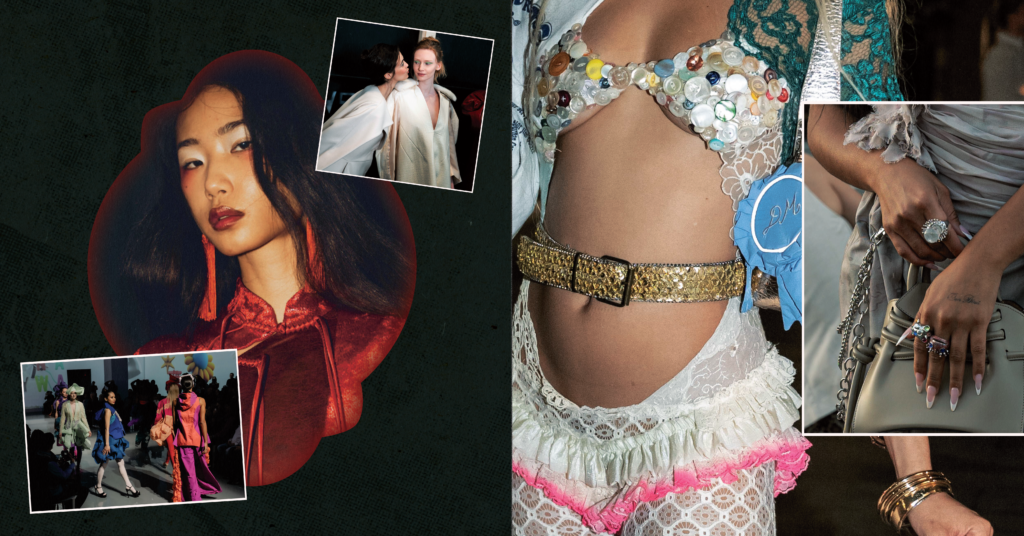
If the clean girl look relied on restraint, then the Fall/Winter 2026 runways throughout New York, Paris, Milan, and London dismantled it. Rick Owens took beauty to an almost alien quality: sculpted faces with heavy, black pigment, and distorted shapes. Prada took on more of a morning-after-a-night-out look: smeared eyeliner, layers, and the focus on smokiness. Meanwhile, Private Policy and Vivienne Westwood leaned into camp: exaggerated, undone glam with thin eyebrows and bright eyeshadow colors to accentuate each brand’s aesthetic. One theme defined luxury fashion this season: excess over perfection.
The Rise of Campy Glam
Zara Larsson’s rebrand might be one of the best beauty reinventions the internet has seen lately. Her recent “siren mermaid” glam — glittery skin, metallic eyeshadow, glitter textures, and exaggerated liner — appeals to a younger, more global audience and has been all over social media. But this shift didn’t appear overnight.
During the COVID-19 lockdown, beauty became experimental out of boredom. The “everything shower,” playful makeup trends, and DIY masks emerged so that people had something to do in isolation. Then came Euphoria, where Alexa Demie, Hunter Schafer, and Barbie Ferreira’s characters redefined glam with rhinestones, graphic liner, and almost psychedelic color palettes. Now, this expressive maximalism has taken hold, but with more intention. During Zara Larsson’s “Midnight Sun Tour”, campy glam is prominent: the shimmering lids, aquatic tones, and makeup that truly fit her identity. That evolution became most visible in Charli XCX’s beauty choices, which became something messier, louder, and more self-aware. What began as a playful, camp-inspired experimentation eventually sharpened into the “undone night-out” look that defined the BRAT aesthetic.
The Anti–Clean Girl Party Makeup
Charli XCX‘s BRAT era brought back the night-out makeup look — smudged eyeliner, bleached eyebrows, and four different lip products scattered at the bottom of a purse. Her beauty look during this era felt unapologetic and fierce, intentionally pushing against the polished restraint of the clean girl aesthetic. More than that, this night-out look also exposed the demanding realities behind the so-called “effortless” minimal beauty. The clean girl look was never just about natural makeup, but relied on a near-perfect performance of looking fresh, put together, and in control. By contrast, Charli XCX’s BRAT glam embraced excess, imperfection, and personal attitude. What began as part of her own aesthetic has since grown into a wider beauty shift, showing up far beyond nightlife and pop performance.
The anti-clean girl makeup look has moved from nightlife and BRAT summer into mainstream beauty campaigns. The recent MAC Cosmetics collaboration with Sephora, featuring Quenlin Blackwell, Gabbriette, and Chappell Roan, leans into the 90s grunge look with smudged pigments, glossy textures, and imperfect placement. The overall effect feels lived-in instead of flawless, minimal, or polished. This campaign celebrates texture, blurring the line between messy and absolute glam, with Western beauty brands shifting away from controlled perfection toward personality.
Now, this alt-grunge look has also entered K-beauty. Brands like Risky Beauty push that aesthetic further, embracing chaotic energy and high pigmentation. Best known for their glossy lip products, exotic eyeshadow colors, and cybersigil-inspired, futuristic packaging, Risky Beauty creates makeup that feels more fun and spontaneous. Founded in 2024, this beauty brand celebrates self-expression, unconventionality, and unapologetic beauty. A rising presence in Korea, it shows how quickly this mood is spreading: we no longer need to worry so much about fixing ourselves. Imperfection is experimental and fun again.
Over the past few years, the clean girl aesthetic has felt rooted in control and quiet competition over who had the most polished skin, the neatest hair, and the most minimal makeup. However, this new shift feels more humane through off-center glitter, smudged eyeliner that makes you feel like a rockstar by the end of the night, and hair that emotes like art. From distorted runway glam to campy mermaid makeup and the slept-in party looks, beauty feels excessive again. There is less pressure to feel flawless and more room for a messier, more playful energy. This anti-clean girl look isn’t about being messy, but having fun and being confident with your own identity.
Looking for more fashion trends? Check out emerging designers who showcased at LFW for Fall Winter 2026!