First Impressions: “X-Men ‘97” Wrestles With the Age of Apocalypse
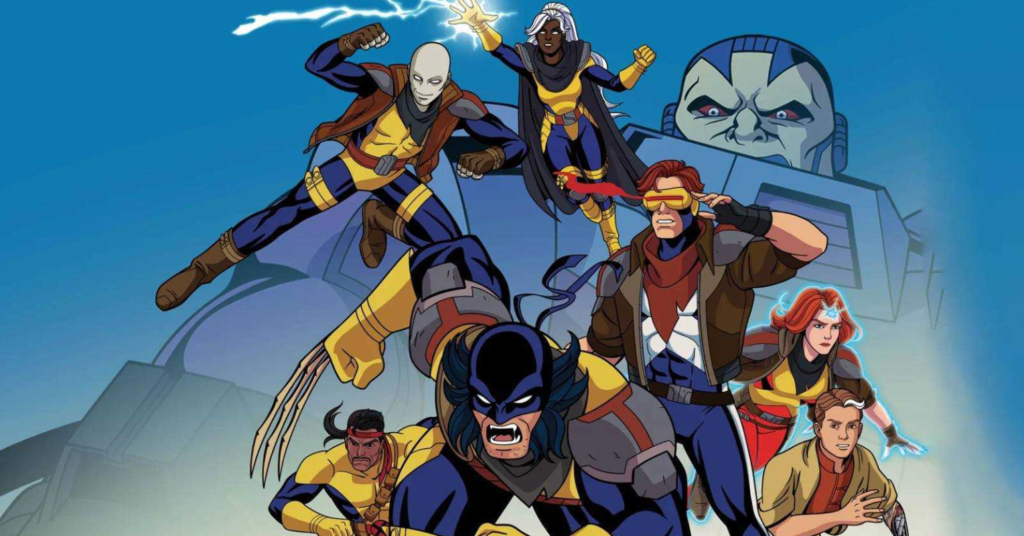
It’s been two years since Marvel Studios Animation debuted X-Men ‘97 in 2024, a continuation and revival of the original ‘90s show, X-Men: The Animated Series. After the commercial and critical success of ‘97’s first season, season two premiered its first three episodes on July 1, with even higher expectations and excitement. Season two picks up where the last installment left off and fills in the gaps of what everyone’s favorite merry mutants have been up to since then.
Note: this article contains spoilers for X-Men ‘97 episodes 1-3!
Destiny and Fate vs. Choice and Autonomy
Season one of the series ended with the core X-Men being pulled through time by an unknown force after saving the Earth from being crushed by Magneto’s Asteroid M. Half of the team (Professor X, Magneto, Beast, Rogue, and Nightcrawler) were transported to Ancient Egypt in 3000 B.C. In contrast, the other half (Cyclops, Jean Grey, Wolverine, Storm, and Morph) landed in a dystopian future in 3960 A.D. in a place known as the “Wasteland.” These timelines are no coincidence — both are pivotal points that circle back to the X-Men’s most formidable foe, Apocalypse. In season two’s first episode, “Days of Past Future,” we pick up in the X-Men’s present era, 1997, where fellow X-Man Bishop and former X-Factor member Forge have located the two teams in hopes of bringing them back home.
With advanced technology provided by Bishop and built by Forge, the two mutants travel to the respective timelines where the X-Men have been scattered; Bishop travels to the past, while Forge goes to the future. With Forge reunited with Wolverine and Storm in the Wasteland, they soon meet up with Cyclops and Jean, who, since arriving in the future, have spent the past few months doing something they never had the chance to do until now — raising their son, Nathan Summers.
This is where the crux of the episode comes in, as it raises valid questions about what’s considered right and wrong when it comes to meddling and influencing the timestream. According to Forge, any more time spent in 3960 A.D. can alter the timeline significantly, maybe even stop Nathan (also known as Cable) from becoming the soldier he needs to be to defeat Apocalypse in his time. However, Jean pushes back, suggesting that the sole reason they were sent here was to help Cable become a soldier alongside the Askani clan who have been taking care of him. But in reality, it’s much deeper than that. At its heart, this is about two parents who saw an opportunity to be present in their child’s life, and took it — no harm, no foul, or at least that’s how they see it.
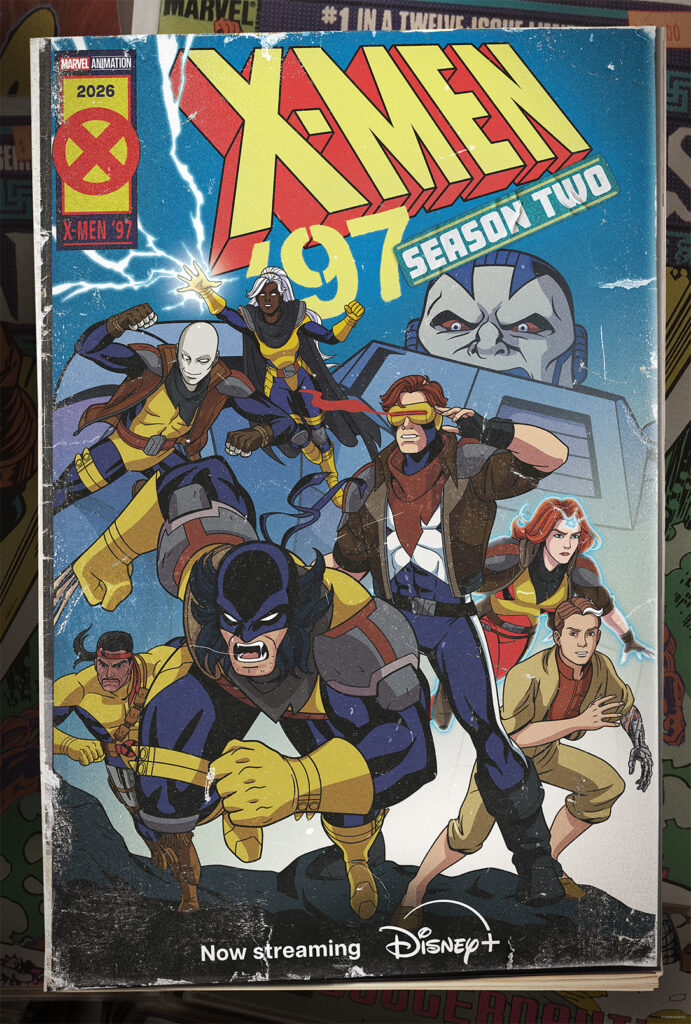
Meanwhile, we find out that a servant of Apocalypse has found a host body for the villain to transfer himself into, one that doesn’t need to regenerate the way Apocalypse always has. And that person happens to be Cable, whom Cyclops and Jean are currently teaching to use and channel his powers to their fullest extent. This is also where we see Scott and Jean wrestle with the idea of destiny and fate. Who gets to decide what Nathan’s future will be, and why does it have to be a future without his own parents in it?
The debate continues as Scott speaks with Mother Askani, leader of the Askani clan. While the elder woman insists the prophecy has always been, Scott questions and defies it, leading to a clash of ideals of what will be and what can be. In response, Scott and Jean attempt to flee the Askani clan with Nathan so they can raise him on their own, without outside influence. Ironically, the two X-Men are doing the same thing Mother Askani has done for all of Nathan’s life — deciding his future for him instead of letting Nathan decide for himself. Ultimately, this escape mission is thwarted by Apocalypse’s Cyber-Hounds and Four Horsemen, who wind up capturing them.
This culminates in an epic fight with the rest of the X-Men coming to aid the Summers in the battle against the Cyber-Hounds, leading to the latter’s demise as Mother Askani rams a train right through Apocalypse’s defenses. In response, we see Apocalypse devise a plan to go back in time and strike the X-Men at their most vulnerable to end the fight once and for all — the 1990s.
After the wreckage, Scott, Jean, and Nathan come together, looking upon all the mutant slaves that Apocalypse has imprisoned in this dark timeline, seemingly freeing them. This marks Nathan’s first step toward becoming the leader he was always meant to be, but this time, he’s choosing it for himself. Likewise, Mother Askani and the X-Men lead the child to Apocalypse’s old Ship, where Storm echoes the sentiment, encouraging him to do what he feels is right in his heart. Through this decision, Nathan becomes one with the sentient Ship as it transforms his techno-organic arm into something more formidable, powerful, and worthy of the soldier he’ll become.
When we cut back to the ‘90s, we see adult Cable forming a team to stop Apocalypse from becoming the massive threat he is in the future by targeting his Horsemen. So far, he’s recruited powerful telepath Psylocke and Warren Worthington III, also known as Archangel, a former Horseman of Apocalypse. His next goal: recruiting Jubilee and Sunspot to the cause.
We’re Not In the X-Men Anymore
Episode two, “A Force To Be Reckoned With,” takes us back to the present, where we meet a new group called X-Factor, a government-sponsored team of mutants tasked with containing “dangerous” mutants and humans in the X-Men’s absence. The team consists of Havok, Polaris, Strong Guy, Multiple Man, and Wolfsbane, and is led by government liaison and director Val Cooper. Their aggressive methods — as shown by news anchor Trish Tilby — have been less than favorable to the public, and rightfully so.
This leads us to the meat of the episode: Cable coming to recruit Jubilee and Sunspot to his new team. Popping in on them at an arcade, Cable wastes no time in laying out the reality of the situation, what it entails, and what the consequences will be. With an increasingly interested expression, Jubilee asks if the team has a name, which leads to one of the smartest and most surprising twists on the classic X-Men intro we’ve seen so far.
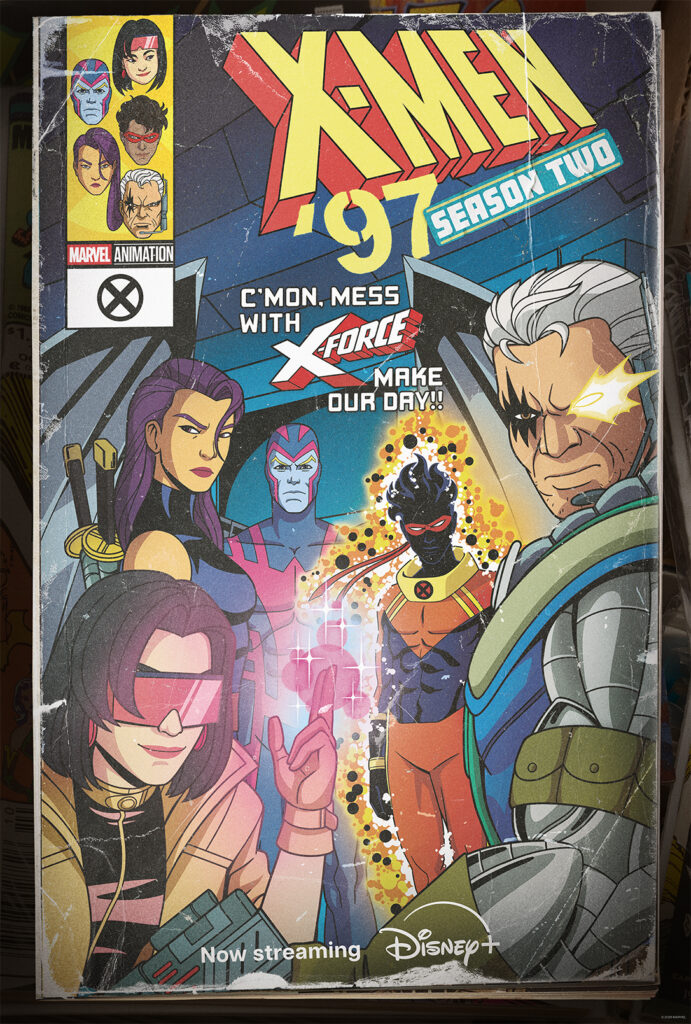
While all of the intros have centered the core X-Men roster, this one is specifically new and is used to formally introduce the audience to X-Force, the new team consisting of Cable, Psylocke, Archangel, Jubilee, and Sunspot. It’s an inventive way to give a separate roster of mutants time to shine that they wouldn’t have otherwise with the main X-Men around.
We then pick up in Brazil, where some time has presumably passed since Jubilee and Sunspot were first recruited. With new suits and, for Jubilee, new hair, the two join the rest of X-Force in the mission to track down one of Apocalypse’s original Horsemen known as War. After finally doing so, they interrogate War for information on the tyrant’s plan to no avail. That’s when Jubilee realizes she’s in for a rude awakening when Psylocke raids his mind for information — something the former’s mentor, Professor X, would never do without consent — but is ultimately blocked by a wall of diamonds. When War is of no use to them anymore, Cable orders Archangel to kill him, leaving Jubilee in turmoil that murder was even on the table. It’s a perfect contrast to how the X-Men operate with empathy and restraint; X-Force, on the other hand, does anything but.
Another aspect this episode does well is showing Jubilee standing her ground in her beliefs and ideals, confronting Cable about X-Force’s methods and refusing to help them out unless they avoid unnecessary killing. Luckily for her, it works, and she’s able to connect the dots of the “wall of diamonds” Psylocke mentioned to yet another powerful telepath, Emma Frost. After some convincing and an implied shady deal, the team lands in Switzerland alongside Emma, scoping out the advanced technology she’s been aiding the Horsemen in smuggling.
However, it’s all a ruse when X-Factor shows up to arrest X-Force, which Emma reveals she’s been working with the government-sanctioned team to round up mutants in exchange for amnesty. After battling it out, X-Force escapes, but without Jubilee, who’s been caught and detained by X-Factor. From here, the series gets into an exploration of authority and ethics — Havok and Polaris believe that since they’ve been given the authority to detain mutants, that means they’re in the right. Jubilee, on the other hand, argues from an ethical standpoint, calling out the team of mutants for betraying their own kind.
Polaris ultimately has a change of heart, disabling the security cameras and Jubilee’s inhibitor collar so she can break out. And when she does, it becomes the strongest showcase of Jubilee’s powers and capabilities that we’ve seen in any X-Men adaptation thus far. Whereas X-Men: The Animated Series often portrayed Jubilee as the eager teenager who wants to be included in the team’s more dangerous missions but can’t, X-Men ‘97 lets her do just that.
Season one was a great start to what the pyrotechnic teenager can do when she learns how to harness her powers, but season two sees Jubilee unleashed. Not only is she more in tune and creative with her power, but she’s significantly improved in hand-to-hand combat, all while maintaining her youthful, spunky energy with built-in roller skates in her boots.
After successfully escaping and freeing the other captive mutants — which include short appearances from Dust, Glob Herman, and the Stepford Cuckoos — Val Cooper officially declares the X-Force team as national fugitives and vows to bring them to justice. However, the debate between these two teams will undoubtedly continue the question of what’s seen as justice versus control.
Cutting back to the future with the Summers family, Apocalypse’s sentient Ship has now become Nathan’s holographic computer that we see him use from now on as an adult. With Cyclops and Jean’s desire to stay in the future cautioned against by both Computer and Mother Askani, Nathan is forced to say goodbye to his parents and send them back to their own time to defend the 1990s from Apocalypse’s return.
To Be or Not To Be
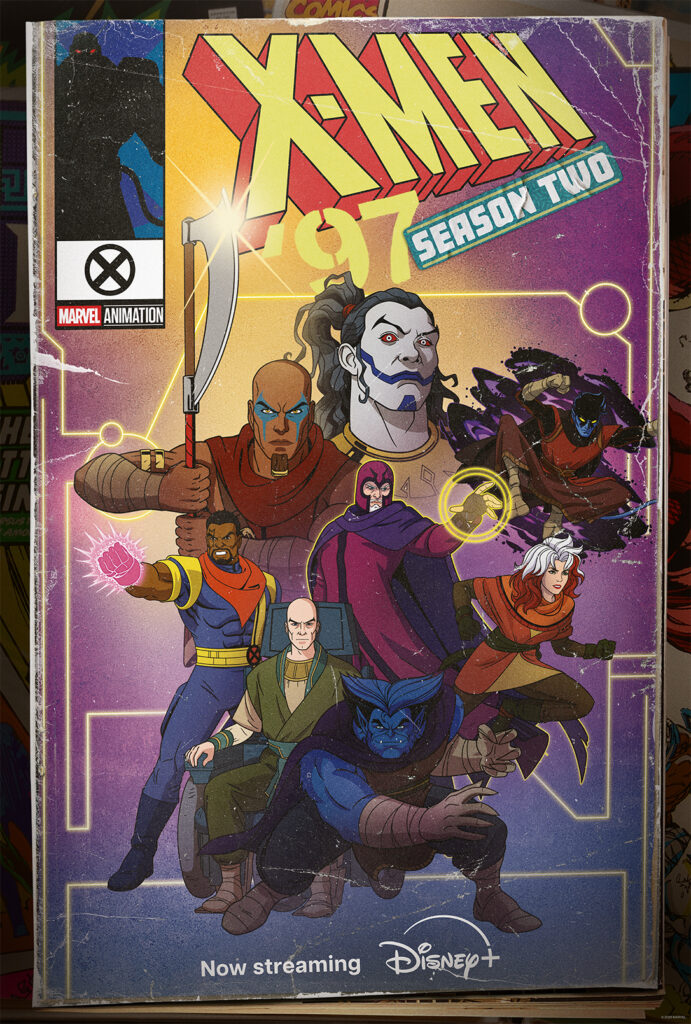
With the Wasteland team back in 1997, we finally pivot to Ancient Egypt in 3000 B.C. in the third episode, “Rise of Apocalypse, Pt. 1.” Here, Magneto has taken a young Apocalypse, En Sabah Nur, under his wing. Similar to Cyclops and Jean’s dilemma in the future, this episode revisits the same debate of how much interfering is considered too much when it comes to affecting the timeline.
While Magneto seeks to steer En Sabah Nur onto a more righteous path — so that he never becomes the maniacal tyrant they know him as in the future — Charles Xavier advises against any interaction with the Egyptian mutant because of who he becomes. However, I believe Magneto sees a lot of himself in Nur, someone who was powerless against oppression, but can still choose to rule with grace and mercy over violence and fearmongering.
Currently, the ruler and tyrant of this time period is Rama Tut, a pharaoh who has enslaved both En Sabah Nur and his people. Under Magneto’s guidance, the young Egyptian mutant and his army of Sandstormers seize Rama Tut’s capital with the war cry, “survival of the fittest,” which eventually becomes his mantra as he rises to power as Apocalypse. After they defeat the Pharaoh’s hoard of advanced robots, En Sabah Nur’s right-hand man, Baal, encourages the mutant to take General Logos’s head. However, he decides against it and instead captures him, clearly influenced by Magneto’s ideals against senseless killing.
After Nur frees the enslaved people, we discover that the rest of the X-Men have been recovering scraps of Rama Tut’s robots and delivering them to Beast, who is attempting to use the technology as a means to build a way home to the ‘90s. So far, every attempt has failed, leading the X-Men to rely on En Sabah Nur to extract key information from General Logos. From there, we see yet another clash of opinions: who En Sabah Nur is at this moment, who Magneto and Baal want him to be, and who the X-Men believe he’s destined to become regardless. Baal advocates for violence and conquest, which directly conflicts with Magneto’s plan to rule with benevolence among humans. Meanwhile, Xavier believes they should leave things alone, for it isn’t noble to change the course of history and the future without mankind’s consent.
@marvel His name is Apocalypse. Stream Marvel Animation’s #XMen97 ♬ original sound – Marvel Entertainment
When we pick up with En Sabah Nur, he interrogates Logos about the secrets of Rama Tut’s technology, only for the general to reveal he was the one who first enslaved the Egyptian mutant as a child. Although Nur only considered killing Logos before, this time, he acts on it out of rage. But not before he’s intercepted by Magneto, who convinces him to spare his life, while the older mutant takes over the interrogation. However, it doesn’t go well, with Logos revealing Rama Tut is on the verge of a discovery that will change everything and keep him at the top of the food chain once and for all. In response, Xavier uses his telepathic abilities to probe Logos’s mind — something he only does in dire circumstances — and only comes out with fragments of the lost temple’s location.
Everything comes to a head as Baal leads En Sabah Nur to learn of the X-Men’s stash of the pharaoh’s robots, assuming they’re using them to build a weapon. Blinded by anger and deceit, the Egyptian mutant finally succumbs to his bloodthirsty impulses, beheading General Logos in cold blood. Not only does this set off a war between En Sabah Nur, his Sandstormers, and the X-Men, but it also informs Rama Tut of their location. Ultimately, the episode ends with the pharaoh launching a missile directly towards them, before the screen fades to black with “To Be Continued.”
Apocalypse For All Time
After watching all three episodes, it’s clear to see why they were released at the same time. Each one acts as a throughline between the different time periods, toggling between the rise of Apocalypse and the madman at his peak. And although each episode highlights separate teams scattered across time, they all tackle similar debates and ethically ambiguous themes. Is it right to tamper with the flow of time, even for the betterment of humans and mutants alike? Or is it selfish to try and sway pivotal moments in their favor at the expense of someone else’s autonomy and consent?
On the other hand, our present-day heroes and morally gray characters are facing the dilemma of what true justice and heroism look like — do the ends justify the means? Or are they just pawns in the larger scheme of things and being used to aid someone else’s agenda?
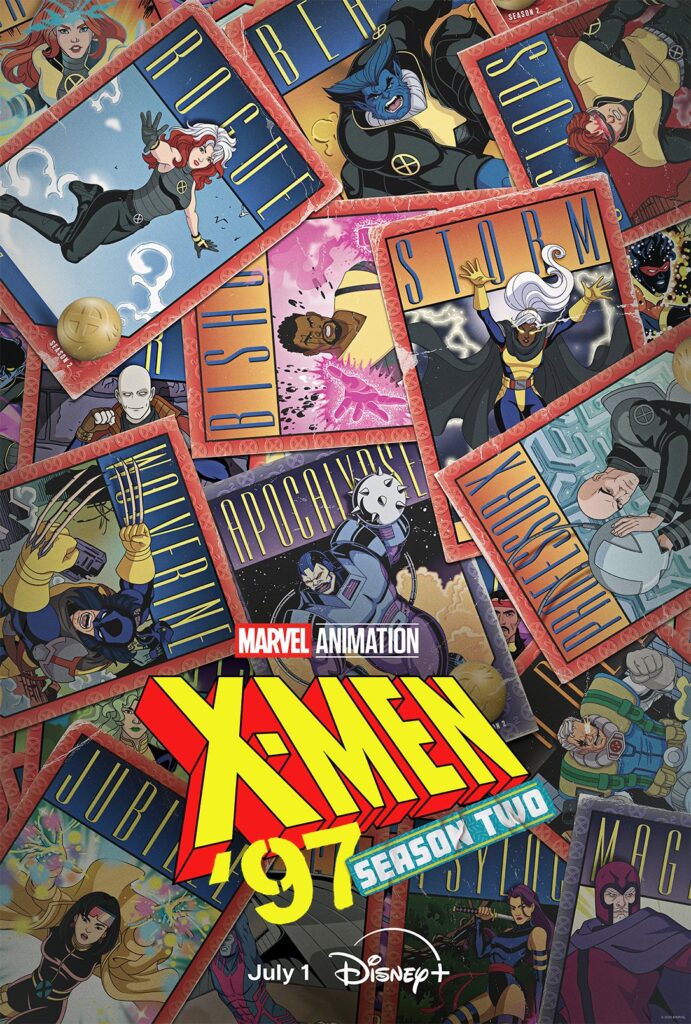
Thematically, it’s a lot to chew on, but that doesn’t make it any less enthralling or entertaining; if anything, it elevates it. X-Men ‘97 continues its deep dive into dense, intimate, and deeply personal themes for its characters. At the same time, the series expands the more grandiose and cosmic storylines, as well. On the visual side, the animation style is just as beautiful, fluid, and expressive as it was in the first season, and the action is both immersive and impactful. It’s especially exciting to see all these new or returning characters and how they’ve been interpreted and updated in the ‘97 art style — I expect many more Easter eggs as the series continues.
With the fourth episode revealed to be part two of the “Rise of Apocalypse” storyline, I’m curious to see if this closes out the first mini-chapter of the nine-episode series. Although considering the critics’ reactions from those who have seen up until episode four, I’ve been told this next one is a doozy — I think I’ll have some tissues on hand, just in case.
If you’re curious and haven’t watched X-Men ‘97 yet, the series is currently streaming every Wednesday on Disney+.
Want more TV and film analyses and recaps? Check out our first impressions of You, Me, and Tuscany!