Inside HARAJUKU beat by SUCRE’s East-Meets-West Nail Art World
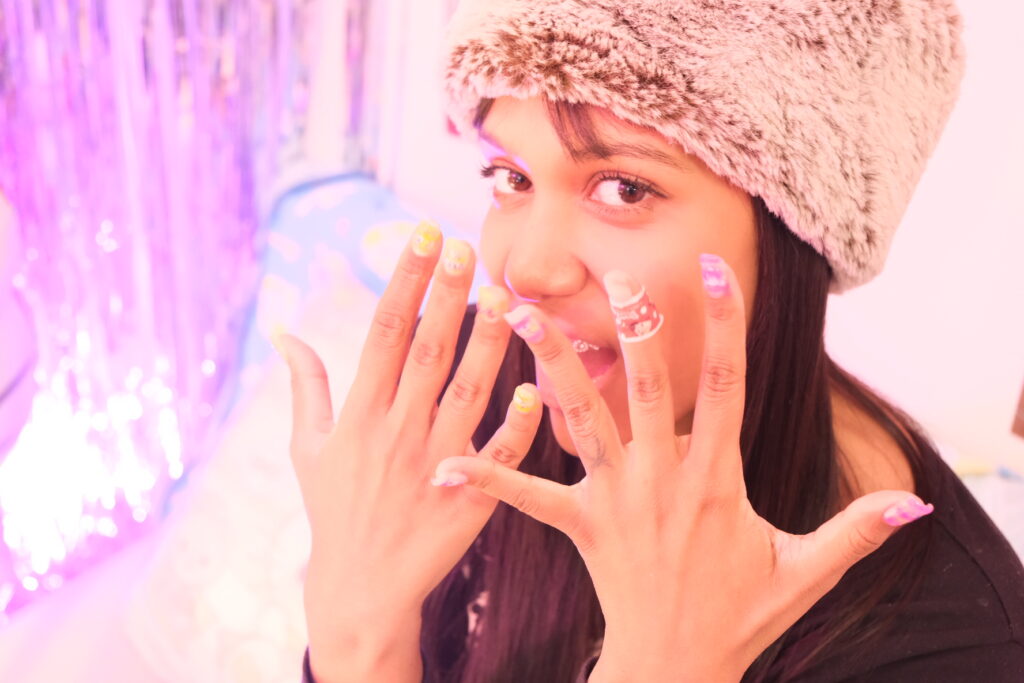
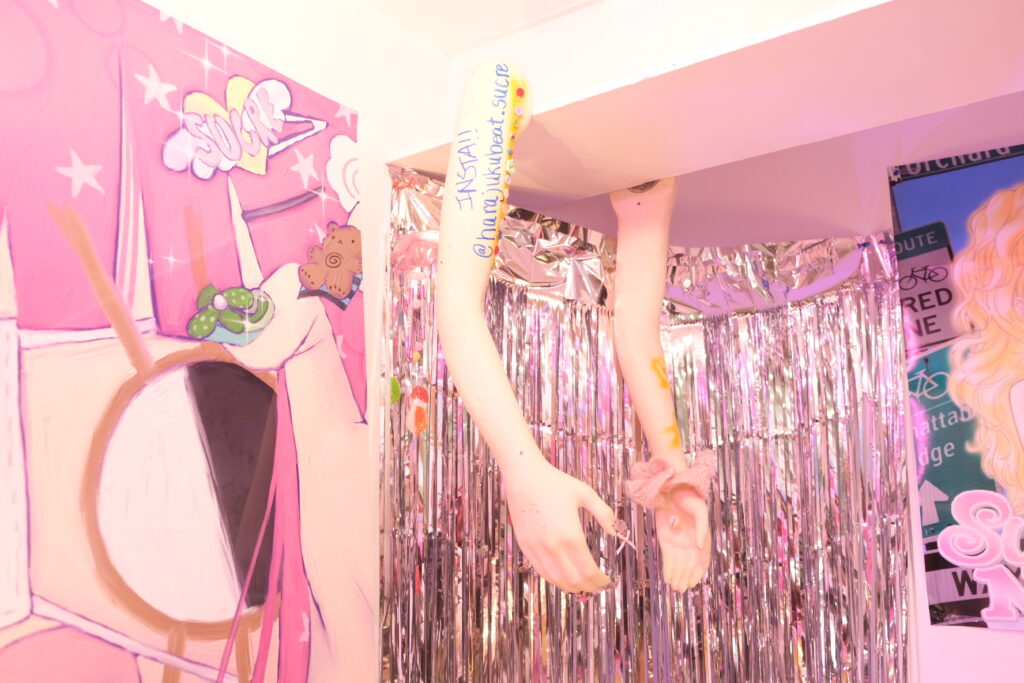
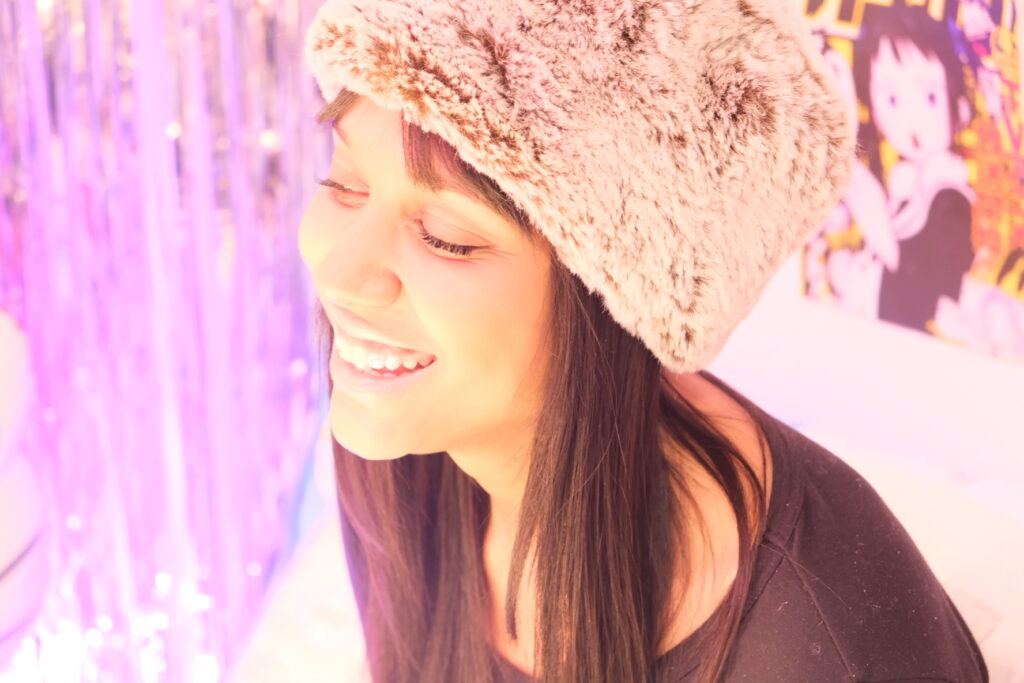
Inside the hyper-pop, pink, anime-inspired studio HARAJUKU beat by SUCRE on the Lower East Side, bright lights glow against a cheetah-print rug as Japanese pop plays in the background. HARAJUKU beat by SUCRE is the sister salon of SUCRE Shinjuku, a nail salon and creative atelier based in Tokyo. Surrounded by mannequin arms displaying intricate press-ons, Isa Anais — the studio’s manager — is helping bring Tokyo’s bright, experimental nail culture into New York’s beauty scene. Anais has turned traditional nail appointments into a cultural exchange, drawing inspiration from Harajuku’s long history of street style. As maximalism moves into wider conversations, Anais’s work transforms manicures into wearable stories rooted in self-expression and individuality.
EnVi sat down with Anais at HARAJUKU beat by SUCRE to talk about her journey from Tokyo to New York, Harajuku’s influence on her artistry, and her East-meets-West approach to nails. Her relationship with beauty and nails started at a young age, long before she started working at the studio. “I’ve been obsessed with nails since I was a teenager, and that passion is what pushed me all the way to Tokyo to really learn the craft.” To Anais, joining the studio in Harajuku wasn’t just a job; it was a way to use nail art to “cross that bridge” between Asian avant-garde beauty and the Western world.
How Harajuku Shaped Isa’s Creative Language
Before Anais brought Harajuku’s nail culture to New York, she immersed herself in the craft in Tokyo. “I moved to Tokyo during the coronavirus pandemic,” Anais told EnVi. “It was a whole process of getting my visa, quarantining, and especially learning the language from the bottom up.” The experience shaped more than just her technical skills — it changed how she understood beauty, space, and subculture.
In Harajuku, Anais worked with a team focused on experimental beauty and took inspiration from the neighborhood’s visual history. “There’s a long history of a very distinct Harajuku street style, specifically the Y2K aesthetics, otaku culture — Japan’s anime, manga, and creator-driven fandom — and Blythe dolls,” Anais said. “It’s really cool to see how things evolved, and if you see how it’s changed now versus the Fruits Magazine era, it’s like, there’s still that kind of flavor, that taste.” These references from the East remained in Anais’s work, while New York added new layers of individuality.
Bridging the Gap: Tokyo Style Meets NYC Soul
After moving to New York, Anais found that the visual language shifted. Harajuku carries decades of distinct references and an experimental foundation. However, downtown New York possesses a more fluid sense of individuality. “I always wanted to bridge Asian art and beauty with the West,” she explained, noting that while Harajuku has a distinct style history, New York offers a different energy. “Here, it’s a melting pot where people from everywhere bring their own culture into the chair, showing you things you’d never see otherwise.”
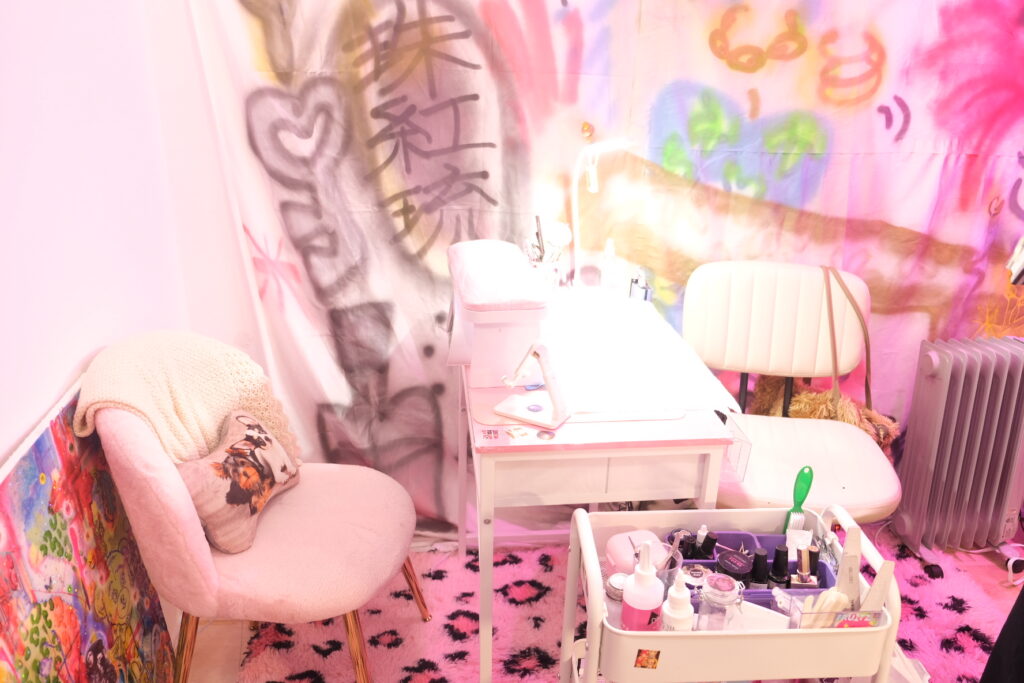
That translation comes to life every day in the Lower East Side. Anais weaves Japanese Y2K motifs and Fruits Magazine maximalism into the aesthetic of NYC creatives, many of whom have never set foot in Tokyo. In Anais’s work, the references aren’t static or replicas, but something that evolves through every customer’s personality in her chair. This makes every set into something personal. For her, this collaboration is the truest form of luxury: an intentional act to slow down, experiment, and create something that belongs, literally, to no one else.
Nail Art as a Form of Luxury
For Anais, nail art is not about a finished set, but about time, trust, and experimentation. To her, nails are not a typical checklist of services, but a form of luxury. This is not luxury in the sense of price, but in conceptual work and time with the artist. Most of the time, when clients walk into a nail salon, they have inspiration photos ready, often pulled from whatever is trending on social media or based on the seasons. But for Anais, clients come in to experiment and test the limits with a point of view.
“Traditional nail salons are more service-focused,” she explained. “You bring in a specific example of what you want done and copy it exactly. At SUCRE, you pick your artist because you like their creative direction — it’s more about their creative expression.”
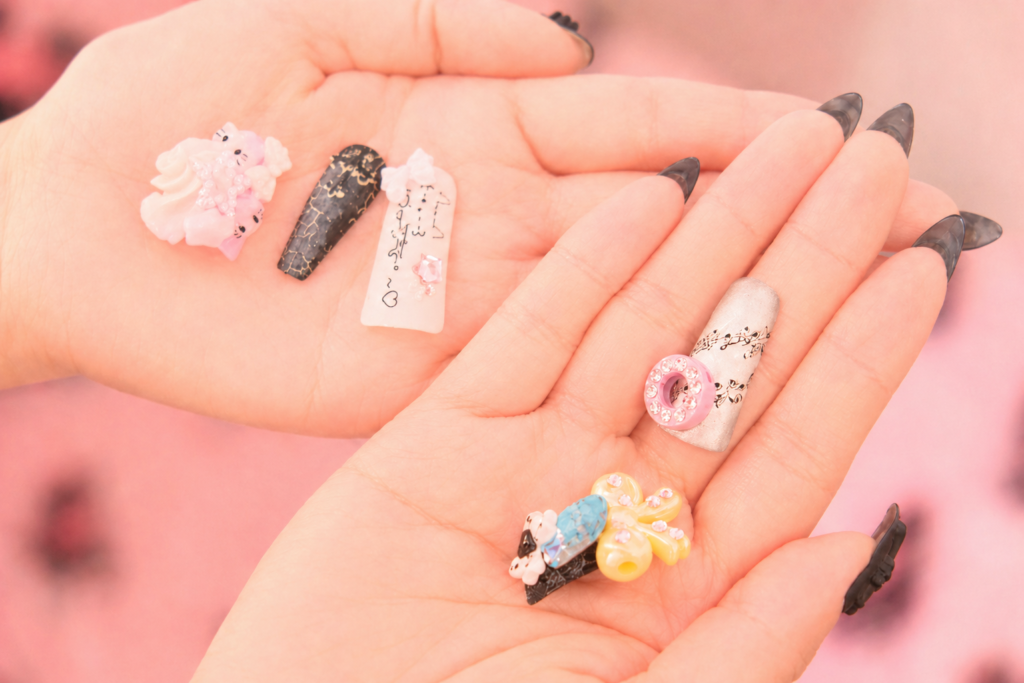
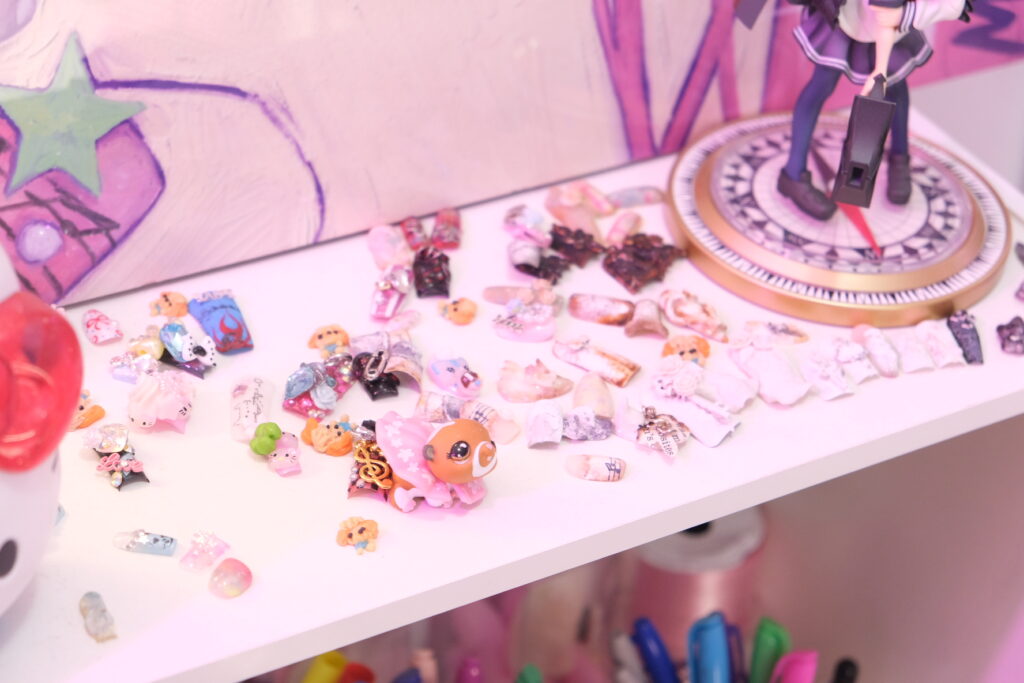
Looking through Anais’s work, it becomes clear that her references rarely begin from another inspo manicure set. Instead, they come from rusty fences, vintage wallpaper, statues, and dolls from the ‘70s. She translates those textures and objects into gel extensions, charms, and sculptural details, creating miniature installations that last for weeks. It’s almost impossible to choose a favorite from the wide range of styles that she’s done.
“In New York, the rusted fence is definitely a sought-after inspiration, but I make sure to bring my own twist for every client,” Anais said. “In Tokyo, clients have been seeking out something called ‘chibi neko nails,’ which is a shorter and fatter claw nail. It’s almost like a big bubble of gel that the artist can customize to the client’s liking.”
While reference photos differ in the East and the West, the intention remains the same. Each set becomes a meaningful collaboration between a client’s curiosity and the artist’s imagination. At HARAJUKU beat by SUCRE, luxury is not about following trends and what other esteemed nail artists are doing, but connecting nails and beauty into a bigger picture and creative world.
A Salon Turned Creative Collective
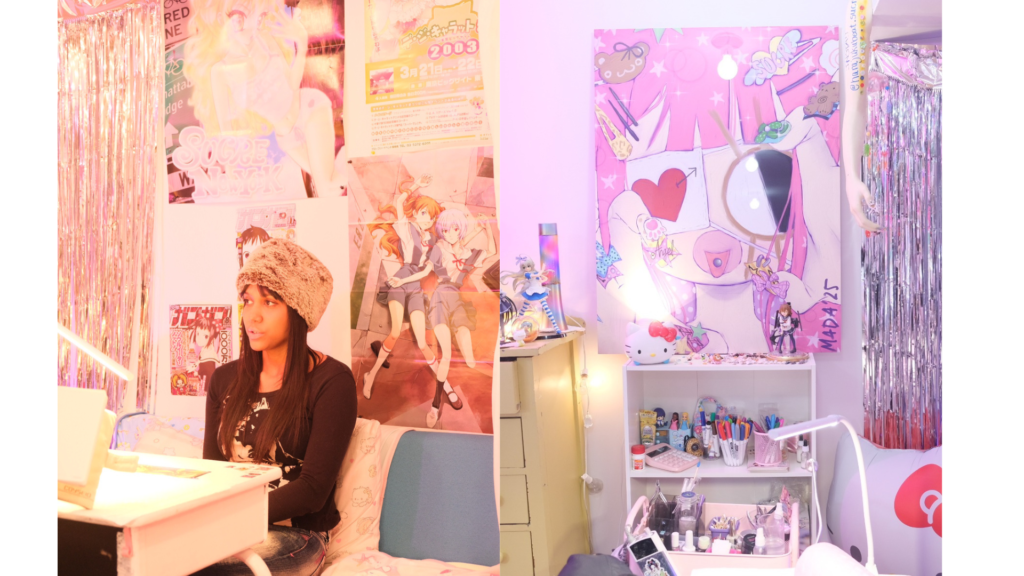
Beyond individual nail appointments, Anais’s work exists inside a larger creative ecosystem. Her previous work includes a live DJ set with Korean American artist Tiffany Day and Seoul-born creative collective Panic Room, turning a nail salon into a performance venue.
“Tiffany Day and Panic Room wanted to perform in unconventional spaces. At SUCRE, we’re always looking for new ways to collaborate with other artists,” Anais explained. “It was exciting to see the studio become a space where music, performance, and nail art could exist in the same place.” The event turned the studio into an intentional creative space, showing how SUCRE’s creative-led approach can extend beyond a nail table.
In addition to turning the SUCRE studio into a collective art space, Anais has also worked with digital creatives who are breaking conventions, such as Ilykimchi. Together, they have created a style focused on artistic connection rather than trends. It’s where individuality meets a Harajuku-inspired nail table in New York — a meeting about music, internet culture, and girlhood.
“Ilykimchi came and gave me full creative freedom, which felt like a true collaboration rather than just a client request,” Anais said. “She wanted something cute, so I brought in some charms and gems that embodied her persona, rather than copying a trend or another artist.” Through that exchange, the final set became less about recycling an image and more about creatively translating another artist’s personality into something wearable.
The HARAJUKU beat by SUCRE Approach
In Anais’s work at HARAJUKU beat by SUCRE, experimentation is less about a signature technique and more about how she approaches each client. The goal is to never chase trends, recreate other artists, or repeat the same viral nail sets.
“I’d rather pull inspiration from furniture, architecture, or vintage wallpaper and turn those textures into something new for each client,” Anais said. “For me, being a bridge between Asian avant-garde nail culture and the Western beauty world means showing people how many possibilities exist within nail art.” In a beauty landscape shaped by trend cycles, Anais’s approach reflects the environment that she helped build, where experimentation and personal connection are a part of the creative process.
When asked what word comes to mind when thinking of the SUCRE name, Anais said, “The word would definitely be experimentation — or playfulness.” At SUCRE, the work is led by curiosity and trust. This difference and human connection feel important in the beauty landscape shaped by algorithms and trend cycles. “We act as a collective, always teaching each other new tricks and trying things in front of each other,” Anais said.
What began as a passionate interest during her teenage years brought her halfway across the world to study the craft in Harajuku. Now, Anais manages the Lower East Side studio — part salon, part performance space, and part creative collective. Through her work, HARAJUKU beat by SUCRE does not simply translate Japanese Y2K beauty aesthetics to New York. Instead, each set becomes shaped by intentional styles, making nail art collaborative and alive.
“I always had this personal dream of connecting Asian avant-garde nail art with the Western beauty world,” Anais said. “If I can change how people see what’s possible with art, even on something as small as a nail, that’s the kind of impact I hope to make.”
Looking for more stories on nail artistry and beauty’s most creative voices? Check out 5 Asian Nail Artists Behind the Met Gala’s Most Iconic Manicures for more on the creatives turning manicures into art.


